When a bowler walks back to their mark with the stadium holding its breath, you know something special might happen.
In women’s ODI cricket, some spells don’t just win matches; they rewrite record books.
Sajjida Shah’s 7/4 against Japan in 2003 remains untouched as the best bowling figures in women’s ODI history.
Twenty-plus years later, no one’s come close.
But she’s not alone in producing match-defining magic with the ball.
This article breaks down every seven-wicket haul in women’s ODIs, the context behind each performance, and what separates a great spell from a legendary one.
Best Bowling Spells in Women’s ODI History
What Makes a Bowling Spell Truly Great?
Numbers tell part of the story. Seven wickets look brilliant on paper, but the real story sits in the match situation.
Was your team defending a low total?
Did you break a partnership that looked unstoppable? Were you bowling on a flat deck where batters should’ve cashed in?
The best spells combine wickets with control.
An economy rate under 2.00 in an ODI means batters couldn’t score even when you weren’t taking poles.
That’s pressure building with every dot ball.
Context matters too.
Taking seven wickets when your team’s already 150 runs ahead is different from defending 180 and knowing one partnership could kill the game. The psychological weight changes everything.
Complete Rankings: Seven-Wicket Hauls in Women’s ODI Cricket
| Rank | Bowler | Figures | Overs | Economy | Opposition | Year |
|---|---|---|---|---|---|---|
| 1 | Sajjida Shah (PAK) | 7/4 | 8.0 | 0.50 | Japan | 2003 |
| 2 | Jo Chamberlain (ENG) | 7/8 | 9.0 | 0.88 | Denmark | 1991 |
| 3 | Anisa Mohammed (WI) | 7/14 | 8.3 | 1.64 | Pakistan | 2011 |
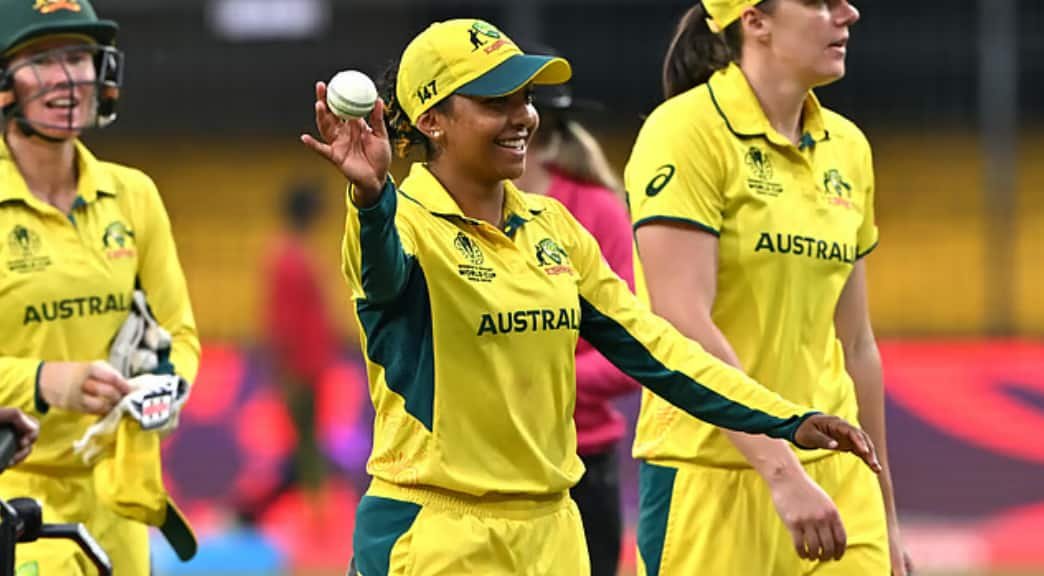
| 4 | Alana King (AUS) | 7/18 | 7.0 | 2.57 | South Africa | 2025 |
| 5 | Ellyse Perry (AUS) | 7/22 | 10.0 | 2.20 | England | 2019 |
| 6 | Shelley Nitschke (AUS) | 7/24 | 7.4 | 3.13 | England | 2005 |
| 7 | Amelia Kerr (NZ) | 7/34 | 9.1 | 3.70 | Zimbabwe | 2026 |
Three Australian names in that top seven. That’s not a coincidence, it’s culture. Australian women’s cricket has built depth in bowling across decades.
Sajjida Shah: The 15-Year-Old Who Set an Unbreakable Standard
Shah’s 7/4 came during the 2003 IWCC Trophy in Amsterdam.
Pakistan posted 181/6, which sounds comfortable until you realize Japan had never faced quality off-spin under pressure.
Shah bowled eight overs, gave away just four runs, and sent down five maidens.
An economy rate of 0.50 means she was conceding a run every twelve balls. Japan managed 28 all out.
Here’s what makes it absurd: Shah was 15 years old during that spell.
She’d made her international debut at 12, making her the youngest cricketer, male or female, to play international cricket.
By 15, she already owned the record book.
She finished with 51 wickets in 59 ODIs for Pakistan. Teammates remembered she’d sing while batting to calm her nerves.
That kind of mental approach probably helped when she was turning the ball past batters twice her age.
Jo Chamberlain: The First to Reach Seven
Before Shah, before anyone else, Jo Chamberlain set the benchmark.
Her 7/8 against Denmark in the 1991 European Championship was the first-ever seven-wicket haul in women’s ODIs.
England bowled Denmark out for 47. Chamberlain’s nine overs cost eight runs.
For twelve years, this stood as the best bowling figures in women’s ODI history.
What separates pioneers from followers is simple: they create the standard when no template exists.
Chamberlain showed what dominance looked like before the women’s game had the infrastructure to celebrate it properly.
Anisa Mohammed: World Cup Qualifier Pressure
Mohammed’s 7/14 arrived in the 2011 World Cup Qualifier Final in Dhaka.
West Indies beat Pakistan by 130 runs, but the real story was Mohammed’s off-spin in the second innings.
She bowled 8.3 overs, and Pakistan had no answers.
This wasn’t just about personal milestones—it punched the West Indies’ ticket to the 2013 World Cup.
Mohammed’s gone on to take over 155 ODI wickets across nearly two decades.
That qualifier final might’ve been her standout spell, but consistency over time matters more than one performance.
Alana King: Rewriting World Cup History in India
King’s 7/18 against South Africa at the 2025 World Cup in Indore broke a 43-year-old World Cup record.
She bowled seven overs, South Africa managed 97, and Australia cruised.
Laura Wolvaardt made 31 and was the only South African batter who looked comfortable. Everyone else?
King’s leg-spin was unreadable. Wrong’uns, googlies, orthodox deliveries—she mixed it beautifully.
This is now the best bowling figures in women’s ODI World Cup history and the best ODI performance by an Australian woman.
King didn’t just take wickets; she dismantled South Africa’s batting structure completely.
When leg-spinners hit rhythm in Indian conditions, batters often freeze. King found that rhythm and didn’t let go.
Ellyse Perry: Surgical Precision in the Ashes
Perry’s 7/22 at Canterbury in 2019 during the Women’s Ashes might be the most complete bowling spell on this list.
Australia posted 269/7, then Perry bowled England out for 75.
She sent down the full ten overs, four maidens, and conceded 22 runs.
That’s an economy of 2.20 across a full spell.
No loose deliveries. No release valve.
Perry’s the only athlete, male or female, who’s represented her country in both a Cricket World Cup and a FIFA World Cup.
That athletic range translated to bowling intelligence—she knew when to attack, when to strangle.
England had no answers. Honestly, most teams wouldn’t have either.
Shelley Nitschke: The Collapse Specialist
Nitschke’s 7/24 against England at Kidderminster in 2005 came when England looked comfortable at 80/1 chasing 194.
Then left-arm spin happened.
Nitschke bowled 7.4 overs and England collapsed to 128 all out.
That middle-over squeeze is where matches flip.
Batters get frustrated, try forcing shots, and suddenly you’re five down before realizing what happened.
She entered the Australian setup at 28 and immediately became their leading wicket-taker in the 2005 World Cup with 11 scalps at an average of 8.27.
Now she’s coaching the next generation of Australian bowlers. The cycle continues.
Amelia Kerr: All-Round Dominance Against Zimbabwe
Kerr took 7/34 against Zimbabwe in Dunedin on March 8, 2026.
That broke Jackie Lord’s 44-year-old New Zealand record of 6/10.
Zimbabwe managed 102.
Kerr then walked out and smashed 45 off 40 balls to seal an eight-wicket win.
All-round performances like that are rare in any format.
She finished that series with 140 runs and 16 wickets.
At 25, she’s already New Zealand’s captain, holds the record for the highest individual score in women’s ODIs (232* vs Ireland), and won Player of the Tournament at the 2024 T20 World Cup.
Kerr’s building a legacy that’ll sit alongside anyone in cricket history.
Standout Six-Wicket Performances Worth Mentioning
Thipatcha Putthawong’s 6/6 for Thailand against Zimbabwe in 2023 deserves recognition.
She bowled 6.1 overs, conceded six runs, and took six wickets with an economy of 0.97.
Thailand’s women’s cricket program keeps improving.
Putthawong’s spell showed the world that match-winning performances can emerge from associate nations too.
Jackie Lord’s 6/10 in the 1982 World Cup helped New Zealand defend 81 by bowling India out for 37.
That record stood for 43 years until King broke it. In an era with minimal coverage, Lord produced something that lasted decades.
Mamatha Maben’s 6/10 for India against Sri Lanka in 2004 remains one of the best performances by an Indian woman in ODIs.
Her medium pace caused havoc in Kandy that day.
Expert Insight: What Separates Good Spells From Great Ones
Great bowling spells have rhythm. Not just wickets falling, but pressure accumulating through dot balls, near misses, and batters feeling like every delivery could be their last.
The best figures in women’s ODI World Cup performances, King’s 7/18, Lord’s 6/10—came when defending modest totals.
That’s pressure. You know, one partnership could flip the match.
The economy rate tells you about control. Shah’s 0.50, Chamberlain’s 0.88, Putthawong’s 0.97—these aren’t just low numbers.
They represent batters feeling suffocated, unable to rotate strike or release pressure.
The psychological element matters too.
When a bowler’s on a hat-trick or has figures like 4/8 after six overs, incoming batters are already second-guessing themselves before facing a ball.
Understanding Bowling Records Across Women’s Cricket Formats
-
Best Bowling Figures in Women’s T20
Sune Luus holds the best figures in Women’s T20Is with 6/10 for South Africa against Thailand in 2023. T20 format means shorter spells, so six-wicket hauls are rarer than in ODIs.
-
Most Wickets in Women’s Cricket All Formats
Jhulan Goswami leads with 355 wickets across ODIs and Tests combined. Ellyse Perry, Anisa Mohammed, and Shabnim Ismail have also crossed 300 wickets in all formats.
The top 10 most wickets in women’s cricket, all formats, include names like Katherine Brunt, Anya Shrubsole, and Marizanne Kapp—bowlers who’ve defined their eras.
-
Best Bowling Performances in India
When discussing the best bowling spells in women’s ODI history in India specifically, Alana King’s 7/18 in Indore during the 2025 World Cup stands out. Indian conditions suit spin, and King exploited that perfectly.
Maben’s 6/10 against Sri Lanka in Kandy (2004) and several performances during bilateral series in India have produced memorable figures, though most record-breaking spells happened outside India.
FAQ: Record Bowling Performances in Women’s ODIs
- Who has the best bowling figures in women’s ODI history?
Sajjida Shah holds the record with 7/4 against Japan in 2003. She was only 15 years old at the time.
- What are the best bowling figures in a women’s ODI World Cup?
Alana King’s 7/18 against South Africa in the 2025 World Cup is the best. It broke Jackie Lord’s 43-year-old record of 6/10.
- Has any bowler taken 8 wickets in a women’s ODI?
No. The maximum is seven wickets, achieved by seven different bowlers. Eight wickets in an ODI remain unprecedented in women’s cricket.
- Which country has produced the most seven-wicket hauls in women’s ODIs?
Australia has three: Alana King (7/18), Ellyse Perry (7/22), and Shelley Nitschke (7/24).
- What’s the best bowling economy rate in a seven-wicket haul?
Sajjida Shah’s 0.50 economy rate during her 7/4 is the lowest ever recorded in a seven-wicket performance.
Why These Performances Matter Beyond Numbers?
Records exist to be chased, but some feel untouchable.
Shah’s 7/4 with an economy of 0.50 requires near-perfect execution. One bad over ruins it.
These spells also change careers. King’s World Cup performance elevated her status globally.
Kerr’s all-round show against Zimbabwe reinforced why she’s captaining New Zealand at 25.
For fans, these moments become reference points. “Remember when Perry bowled England out for 75?”
That’s the kind of performance people discuss years later, comparing every dominant spell against it.
Bowling records in women’s cricket continue evolving. The game’s growing, pitches are improving, and batters are getting stronger.
Breaking these records will require something extraordinary.
But that’s what makes cricket beautiful.
Somewhere, a young bowler’s working on their action, dreaming of the day they walk back to their mark with a chance to rewrite history. Until then, Shah’s 7/4 sits there, daring anyone to try.
Also Check:
About the Author