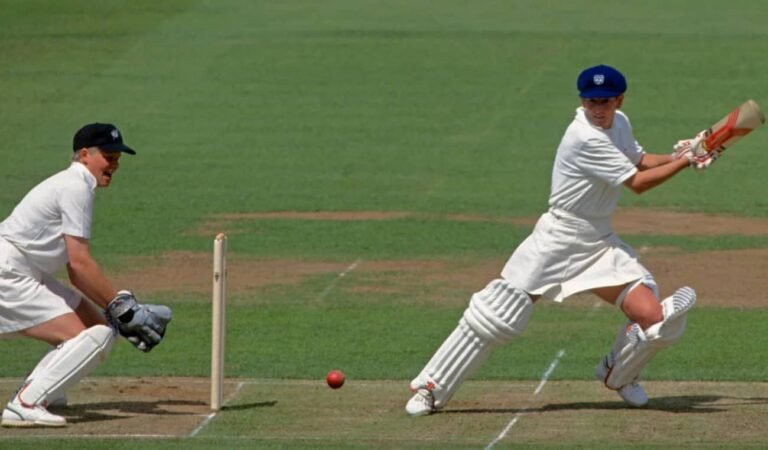
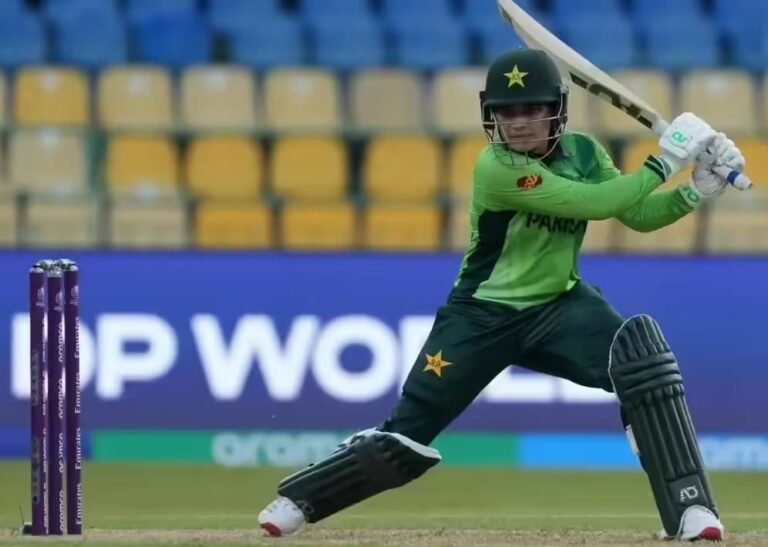
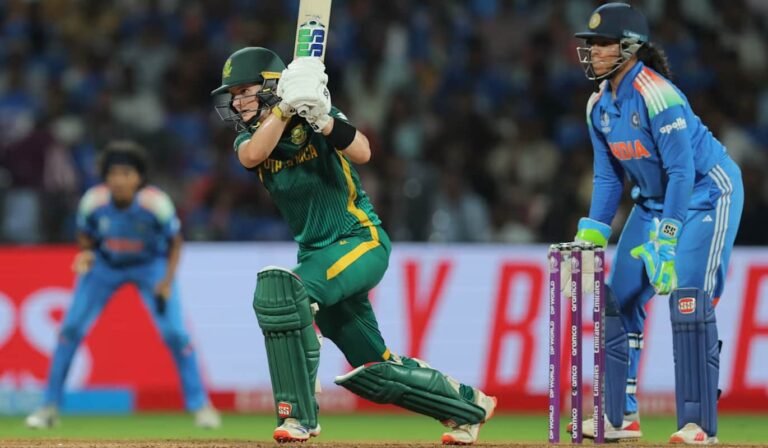
Fours are the foundation of T20 batting excellence.
While sixes attract the loudest reactions from fans, it is the consistent four-hitter who controls match tempo, builds innings pressure, and forces bowling captains to constantly reassess their field placements and bowling strategies.
In women’s T20 cricket, timing and placement separate ordinary batters from elite ones.
A well-placed cover drive or a precise square cut that races to the boundary delivers the same run value as a mishit that barely clears the rope — but with a fraction of the risk and a demonstration of technical authority that compounds psychological pressure on the bowling side over twenty overs.
Tracking most fours in wpl history reveals which players have genuinely dominated WPL batting across every season since 2023 — not through brute force, but through the skill, discipline, and consistency that defines world-class T20 batsmanship at the highest level.
Most Fours In WPL History

Most Fours In WPL History
| Player | Span | Matches | Innings | Runs | Highest Score | Strike Rate | Fours |
|---|---|---|---|---|---|---|---|
| Nat Sciver-Brunt | 2023–2026 | 35 | 35 | 1346 | 100* | 144.73 | 205 |
| Meg Lanning | 2023–2026 | 33 | 33 | 1159 | 92 | 126.52 | 173 |
| Harmanpreet Kaur | 2023–2026 | 34 | 33 | 1111 | 95* | 143.91 | 140 |
| Smriti Mandhana | 2023–2026 | 33 | 33 | 882 | 96 | 129.70 | 125 |
| Hayley Matthews | 2023–2026 | 33 | 33 | 861 | 77* | 122.47 | 121 |
| Shafali Verma | 2023–2026 | 34 | 34 | 1044 | 84* | 155.35 | 120 |
| Ellyse Perry | 2023–2025 | 25 | 25 | 972 | 90* | 132.96 | 109 |
| Grace Harris | 2023–2026 | 29 | 28 | 734 | 85 | 145.92 | 97 |
| Richa Ghosh | 2023–2026 | 33 | 31 | 808 | 90 | 151.59 | 87 |
| Ashleigh Gardner | 2023–2026 | 32 | 32 | 765 | 79* | 140.88 | 76 |
Top 10 Players With The Most Fours In WPL History
Nat Sciver-Brunt — Master of Timing
- Nat Sciver-Brunt leads most fours in wpl history with an extraordinary 205 boundaries from 35 innings — a figure that reflects not one exceptional season but sustained excellence across the entire span of the league’s existence. Her 1,346 runs at a strike rate of 144.73 confirm that her boundary-hitting output arrives within an overall batting contribution that consistently anchors Mumbai Indians’ totals.
- What separates Sciver-Brunt from every other player in this top ten is the method she uses to reach the boundary. Her cover drives, straight drives, and flicks through mid-wicket all arrive through timing precision rather than force — the ball travels to the boundary because the contact is so clean that no additional power is required. Fielders are positioned based on where they expect the ball to go, and Sciver-Brunt consistently places it slightly outside those expectations.
- Her highest score of 100 not out is the WPL first century recorded in this top ten — and it was an innings built almost entirely on four-hitting that demonstrated how a batter can score at a strike rate above 140 without relying on sixes to accelerate the scoring rate. That century stands as the definitive evidence of what controlled, technically precise boundary-hitting can produce across a complete T20 innings.
- Mumbai Indians have constructed their batting strategy around her presence in the middle order precisely because she delivers consistent boundary output in every match she plays. She does not have bad days where her timing deserts her — she reads conditions quickly, identifies the weakest bowler in the attack, and systematically targets the gaps in the field until the scoreboard reflects her dominance.
Meg Lanning — Tactical Boundary Builder
- Meg Lanning’s 173 fours from 33 innings reflect a batter whose entire game is built around technical field awareness and the ability to place the ball into spaces that other players simply cannot find. Her 1,159 runs at a strike rate of 126.52 come from a player who has captained Australia to multiple World Cup titles and brings the entire accumulated tactical understanding of that career into every WPL innings she plays.
- Lanning excels on the offside through precision cuts and drives that consistently beat the cover fielder or the point fielder by the narrowest of margins — not because she hits the ball harder, but because she reads the fielder’s position and adjusts her shot direction in the delivery stride. This micro-adjustment capability is the product of thousands of hours of international T20 cricket at the highest level, applied now to the WPL stage against the world’s best women’s bowlers.
- Her strike rotation between boundaries is equally significant. She does not hunt boundaries on every delivery — she takes singles and twos from good balls and identifies the loose deliveries that deserve punishment. This selectivity means her four-hitting strike rate is higher than pure volume suggests, because she wastes very few deliveries attempting boundaries off balls that do not deserve the shot.
- Her highest score of 92 — narrowly short of a WPL century — arrived in a match where the opposition bowling attack was attempting to restrict her through careful field placements and disciplined bowling into her body. She found boundaries regardless, demonstrating how elite field awareness and placement consistency can neutralize even well-constructed defensive plans.
Harmanpreet Kaur — Aggressive Anchor
- Harmanpreet Kaur’s 140 fours alongside 1,111 runs define her as the most complete run-accumulator in the WPL’s batting history — a captain whose individual output simultaneously anchors and accelerates her team’s innings depending on what the match situation demands. Her strike rate of 143.91 confirms that her anchoring role is not a passive one; she scores at pace while providing the stability that allows her batting partners to play more freely.
- Her most distinctive four-hitting weapons are the square cut and the sweep — two shots that require exceptional timing and footwork to execute at T20 pace against high-quality international bowling. The square cut demands precise weight transfer to the back foot and an ability to read the ball’s length early enough to position correctly. Harmanpreet plays both shots with the naturalness of someone who has practiced them across fifteen years of international cricket, making them look routine even against deliveries specifically designed to prevent them.
- Her wrist work through the leg side is equally important to her four count. She generates a deflection through mid-wicket and fine leg off deliveries that other batters would either miss entirely or hit straight to a fielder — an ability that expands her scoring zones beyond what most opposition captains plan defensively and creates boundaries from deliveries that appear well-directed from the bowler’s perspective.
- Leading from the batting crease with 140 fours across 33 innings also sends a clear message to her Mumbai Indians teammates. A captain who consistently finds boundaries sets the tone for the entire team’s batting approach — and her output across every WPL season has created a batting culture at Mumbai built around aggressive, technically grounded boundary-hitting from the top of the order to the tail.
Smriti Mandhana — Elegant Stroke-Maker
- Smriti Mandhana’s 125 fours from 33 innings are produced through a batting style that is immediately distinguishable from every other player in this top ten. Her boundaries do not arrive through muscle — they arrive through timing so precise that the ball appears to accelerate off her bat rather than being struck with any additional effort. This aesthetic quality reflects genuine technical excellence rather than simply good visual presentation.
- Her cover drive is the most discussed shot in women’s T20 cricket for good reason. She uses her front foot fully, presenting a full face of the bat through the line of the ball, and the natural pace of the delivery combined with the clean contact carries the ball to the boundary without requiring any additional force. Against both pace and spin, in home conditions and neutral venues, this shot consistently finds the gap between cover and extra cover that opposition captains have been trying and failing to close throughout her career.
- Mandhana opens the batting for RCB and her four-hitting in the powerplay overs is particularly valuable to her franchise. The first six overs, with fielding restrictions in place, are the phase where well-placed boundaries are most easily found — and she consistently extracts maximum value from that phase through shot selection that prioritizes placement over power. Her 882 runs at a strike rate of 129.70 reflect an opener who delivers boundary-rich starts that give RCB’s middle order the platform to accelerate.
- Her highest score of 96 — frustratingly close to a WPL century — was an innings that showcased her ability to maintain four-hitting consistency across a long T20 innings. She found boundaries in the powerplay, through the middle overs against tighter fields, and in the death overs when bowlers were targeting yorker lengths specifically to prevent the straight drives and cover drives that are her primary weapons.
Hayley Matthews — Stability Provider
- Hayley Matthews’ 121 fours from 33 innings reflect a four-hitting contribution that is produced within a batting role uniquely different from most of the other players on this list. She opens the batting for Mumbai Indians and frequently plays the anchor role — staying at the crease while batting partners play more aggressively — which means her boundaries arrive from a more selective shot selection process than that of dedicated power-hitters.
- Her square cut is her most reliable boundary-hitting weapon — a shot played with compact technique and excellent weight transfer that consistently finds the gap between point and backward point regardless of how precisely the fielders are positioned. She combines this with a pull shot against shorter deliveries that uses the ball’s pace to redirect it to the square leg boundary without requiring significant additional force from her bat swing.
- Matthews’ WPL career demonstrates how valuable a consistent, technically correct batter is to a T20 franchise’s long-term success. Her 861 runs across 33 innings at a strike rate of 122.47 might appear modest compared to the more explosive players in this list, but her contribution is what enables those explosive players to function. She takes pressure off her batting partners, accumulates partnerships, and delivers match-winning innings when Mumbai require someone to bat through rather than someone to explode through.
- Her highest score of 77 not out arrived in exactly such a match — Mumbai needed controlled accumulation over a full innings, and Matthews provided it through consistent boundary-hitting that maintained run rate without ever taking the kind of risk that would have ended her innings prematurely. That innings encapsulates the value she brings to WPL batting statistics that raw numbers alone cannot fully capture.
Shafali Verma — Controlled Explosiveness
- Shafali Verma’s 120 fours alongside her leading position in most sixes in wpl confirms that her reputation as purely a power-hitter who relies on sixes to score at pace is a significant misreading of her batting. She hits 120 fours and 53 sixes — a ratio that reflects a technically complete opener rather than a one-dimensional slugger who happens to find the boundary occasionally.
- Her cut shots and off-side drives demonstrate classical technique applied within an aggressive overall framework. She does not simply swing hard at every delivery — she reads lengths quickly and selects the appropriate shot for each ball, producing cover drives off full deliveries and cuts off short ones with equal consistency. The difference between Shafali and a technically correct but cautious opener is purely the intent with which she plays those shots — she commits fully to attacking every delivery that deserves it rather than playing the same shots defensively.
- Her strike rate of 155.35 — the highest in this entire top ten — reflects what that aggressive intent produces when combined with genuine technical skill. She is not a high strike rate batter despite poor technique; she is a high strike rate batter because her technique is good enough to produce boundaries from deliveries where other players would accumulate singles. The 120 fours in her WPL record are the clearest evidence of that technical foundation.
- Her highest score of 84 not out contained both fours and sixes in a ratio that reflected an innings built on shot selection rather than pure aggression — choosing the right boundary type for each delivery based on length, line, and field placement rather than defaulting to maximum-risk options on every ball.
Ellyse Perry — Technical Perfection
- Ellyse Perry’s 109 fours from only 25 innings represent the highest boundary-per-innings ratio outside the top three on this list — a figure that reflects how consistently she finds the boundary despite batting for fewer overs than the players above her. Her 972 runs at a strike rate of 132.96 confirm that the fewer matches she has played have not diminished her boundary-hitting output in terms of per-innings impact.
- Her batting technique is frequently cited in coaching contexts as the closest thing to textbook correctness available in women’s T20 cricket. Her straight drive is played with a full flow of the bat through the line of the ball and a high follow-through that generates timing rather than forcing pace. Her cover drive presents the full face of the bat at the point of contact with the perfect degree of front-foot commitment. These shots look effortless because they are technically correct — the body mechanics are aligned to produce maximum bat-to-ball efficiency from minimum physical effort.
- Perry bats in the middle order for RCB and her role is to build the innings through the tightest period of a T20 match — overs eleven through sixteen — when bowling captains set their most defensive fields and bowl their most disciplined deliveries to restrict the scoring rate. Her four-hitting in this phase is particularly valuable because it maintains run rate during the period where WPL teams most frequently stall.
- Her highest score of 90 not out as a match-finisher represents the ideal application of her technical four-hitting ability. She brought the innings to its conclusion through consistent boundary-finding rather than relying on sixes to accelerate at the end — a match-winning performance that demonstrated how technical perfection produces results just as decisively as raw power when applied with the right match awareness and composure.
Grace Harris — Middle-Overs Accelerator
- Grace Harris’ 97 fours from 28 innings confirm her as the most efficient boundary-finder in the middle overs among the players on this list. Her 734 runs at a strike rate of 145.92 from a middle-order position reflect a batter who identifies scoring opportunities within defensive field settings and exploits them with physical power combined with genuine placement awareness.
- Her pull shot and cut shot are particularly devastating against short-pitched deliveries, generating fours at a rate that forces bowling captains to immediately reconsider their length after a single misplaced delivery is despatched to the boundary. The speed with which she processes the ball’s length and commits to the attacking shot is a product of T20 cricket-specific training that rewards the batters who eliminate hesitation from their decision-making process entirely.
- What distinguishes Harris from other middle-order batters on this list is her complete absence of a weak scoring zone. She hits fours straight, through the covers, over mid-on, through mid-wicket, and through square leg with roughly equal frequency — making it impossible for any field placement to consistently prevent her from finding the boundary. Bowlers must bowl perfectly, and when they do not, she punishes the error immediately and definitively with a four that resets the psychological balance of the match.
- Her highest score of 85, featuring multiple boundaries that built her team’s total to match-winning level, demonstrates her ability to produce significant match-winning contributions from the middle order — a position where consistency of boundary-finding across a full innings is harder to maintain than it appears from the outside.
Richa Ghosh — Pressure Finisher
- Richa Ghosh’s 87 fours produced under death-over conditions against WPL’s best bowlers represent a different kind of boundary-hitting challenge from any other player on this list. She arrives at the crease when fielding restrictions are off, when bowlers are bowling their most difficult deliveries at their best lengths, and when the asking rate frequently demands more than twelve runs per over — and she finds the boundary consistently despite those conditions.
- Her square cut and lofted drives through the infield are her primary four-hitting weapons in the closing overs. The square cut off yorker-length deliveries is a shot that requires exceptional hand speed and reflexive timing — a delivery bowled specifically to prevent exactly that shot is redirected to the boundary through an ability to process the ball’s trajectory faster than the bowler expects. When that shot works, it not only produces four runs but immediately destabilizes the bowler’s confidence in the length they were trying to execute.
- Her 808 runs at a strike rate of 151.59 from the lower middle order confirm that her boundary-hitting in these demanding conditions is consistent rather than occasional. She does not rely on bowling teams making mistakes — she creates boundaries from good deliveries through the quality of her bat speed and shot selection. Her highest score of 90 demonstrated that she can also operate effectively when given more time and balls to work with — an innings that expanded RCB’s understanding of how she can be deployed across different match situations.
Ashleigh Gardner — All-Round Consistency
- Ashleigh Gardner’s 76 fours from 32 innings close this top ten with a boundary-hitting contribution that is produced within the most demanding all-round workload in the group. She bowls four overs in almost every match she plays for Gujarat Giants and then bats in the middle order — a combination that requires physical endurance and mental concentration across both disciplines simultaneously throughout every match.
- Her sweep and cut shots are her most consistent four-producing weapons against both pace and spin. The sweep in particular allows her to negate precise off-stump bowling by pre-committing to a leg-side boundary option that converts a well-directed ball into a scoring shot — a technical skill that is especially valuable against the high-quality spin bowling that WPL produces in every match. Her ability to play this shot under pressure, with the match situation demanding boundaries, reflects the match-day composure of an experienced international player.
- Finding gaps consistently with spread fields — as Gardner must do in the middle overs when bowlers are attacking with full defensive rings — requires the ability to hit the ball with enough precision that the gap is reached before the fielder can respond. She achieves this through placement rather than pace, using her bat speed to direct the ball into the areas she has identified before the delivery arrives. Her highest score of 79 not out, which won a match Gujarat appeared to be losing, stands as the definitive demonstration of how this precise gap-finding capability translates into match-winning impact.
Key Observations and Trends
Anchors vs Aggressors
The ten players on this list divide into two clear categories that produce different four-hitting profiles.
Meg Lanning and Hayley Matthews are anchor batters — players with slightly lower strike rates who accumulate fours through consistent placement and shot selection across long innings that span fifteen to twenty overs.
Shafali Verma and Richa Ghosh are aggressive batters — players with higher strike rates who generate fours alongside sixes in shorter, more explosive innings.
Both approaches produce significant four-hitting totals, but through entirely different mechanisms.
The anchor batter’s fours arrive from the accumulation of good shot-making across many balls faced.
The aggressive batter’s fours arrive from concentrated boundary-finding in fewer, more intensely scored overs. Understanding this distinction explains why Lanning’s 173 fours at a strike rate of 126.52 and Shafali’s 120 fours at 155.35 can both represent elite-level boundary-hitting contributions.
- Strike Rate Relationship The total fours in wpl 2026 data confirms that four-hitting efficiency and overall strike rate are closely correlated but not identical. Players with very high strike rates — Shafali at 155.35, Richa Ghosh at 151.59 — achieve their pace through a combination of fours and sixes. Players with lower strike rates — Lanning at 126.52, Matthews at 122.47 — achieve their run totals primarily through fours, meaning boundaries are more central to their strike rate construction than is the case for the explosive hitters.
- Match Impact The wpl most 50 records align closely with the players who appear in this top ten — consistent four-hitters produce the most half-centuries because their ability to find boundaries regularly is what converts starts into substantial scores. WPL highest score records similarly cluster around players who can maintain four-hitting output across extended innings. Sciver-Brunt’s century is the clearest example — an innings sustained entirely by consistent boundary-finding across every phase of play.
- Consistency Over Seasons The players who lead this chart have all featured across multiple WPL seasons without significant interruption — Sciver-Brunt, Lanning, Harmanpreet, and Mandhana have all played 33 or more innings. This longevity separates them from potentially higher per-innings boundary-hitters who have not maintained the same fitness, availability, and consistent form across the full span of the league’s existence.
Why Fours Matter More Than Ever In WPL
- Lower Risk Scoring A four requires significantly less risk than a six in terms of the shot selection and bat-to-ball contact precision needed to execute it successfully. A batter who mis-times a six attempt by twenty percent is likely to be caught. A batter who mis-times a four attempt by twenty percent typically still finds the boundary or scores two runs. This risk-reward asymmetry makes four-hitting the more sustainable boundary-scoring strategy across a full T20 innings.
- Fielding Pressure Consistent four-hitting places sustained physical demands on opposition fielders that cumulate across a match’s twenty overs. Fielders chasing to the boundary multiple times per over — and occasionally misfielding under fatigue — create additional runs beyond the direct boundary value. The best four-hitters in WPL understand that their boundary-finding creates secondary scoring opportunities through the physical toll it places on the opposition’s fielding unit.
- Tactical Advantage The contrast with most sixes in wpl 2026 is instructive here. Teams that build their batting around consistent four-hitters can score at competitive rates against defensive field settings that specifically target six-hitters. When a bowling captain spreads the field to prevent maximums, the gaps created for fours are exactly what players like Sciver-Brunt, Lanning, and Perry exploit most effectively — turning defensive bowling plans into boundary-scoring opportunities.
- Modern T20 Evolution Analytics-driven shot selection has become an increasingly central element of WPL preparation across every season since 2023. Players now enter the match with detailed information about specific bowlers’ most common deliveries, optimal scoring zones, and field placement tendencies. This data-driven preparation directly benefits four-hitters — players who can place the ball precisely into predetermined gap zones extract maximum boundary value from the analytical work done before the first delivery is bowled.
Conclusion
The full picture behind most fours in wpl history confirms that the league’s batting excellence is built on technical skill and consistent placement as much as it is on the explosive hitting that generates the most social media attention.
From Nat Sciver-Brunt’s 205 boundaries at the summit to Ashleigh Gardner’s 76 completing the group, every player in this top ten has contributed to WPL’s reputation as a league where batting quality sets the global standard for women’s T20 cricket.
- Boundary Consistency as Match Control The players who lead this chart are the same players whose teams consistently post competitive totals and successful chases. Consistent four-hitting creates run-rate control that determines match outcomes more reliably than any single explosive innings.
- Role of Technique Over Power Sciver-Brunt, Lanning, and Mandhana collectively demonstrate that timing and placement produce more fours than raw strength. Technical excellence across an entire innings outperforms one-off power contributions.
- Growth of WPL Batting Standards The four-hitting totals in this list grow season on season as players develop greater familiarity with WPL venues and opposition bowlers. The improvement is measurable and ongoing.
- Future Challengers to This List Emerging WPL batters who combine technical correctness with consistent match availability will challenge these numbers in future seasons. The most player of the match in wpl awards consistently go to batters who produce boundary-rich innings — a pattern that will continue to drive the development of four-hitting quality across every franchise in the league.
Also Check:
About the Author