When a batter sends the ball soaring over the ropes without it touching the ground, the crowd erupts. In women’s cricket, these moments have become increasingly spectacular.
The longest sixes in women’s cricket history aren’t just about raw power—they’re about timing, technique, and the confidence to swing through the line when the moment demands it.
Over the past few years, particularly with the launch of the Women’s Premier League, we’ve seen women cricketers consistently clearing boundaries with authority.
Some sixes travel just beyond the rope.
Others fly into the stands, leaving fielders helpless and spectators amazed.
The distance a six travels tells you everything about how cleanly the bat made contact with the ball.
Longest Sixes in Women’s Cricket History
What Makes a Six Travel Further?
Before we look at the record books, it’s worth understanding what separates a 60-meter six from a 90-meter one.
It’s not just brute strength. The sweet spot of the bat, the angle of elevation, the speed of the incoming delivery, and even wind conditions all play a role.
When everything aligns—bat speed, body position, timing—the ball doesn’t just clear the boundary. It sails.
Women’s cricket has evolved dramatically. The fitness levels, bat technology, and tactical freedom have all improved.
Batters now have the license to attack from ball one, particularly in T20 cricket. This shift has created the perfect environment for massive hitting.
Top 10 Longest Sixes in Women’s Cricket History
The measurements here come from official match data, tracked using ball-tracking technology during international matches and premier tournaments. Here’s how the biggest hitters stack up:
| Player | Distance | Tournament | Match |
|---|---|---|---|
| Sophie Devine (NZ) | 94 meters | WPL 2023 | RCB vs UP Warriorz |
| Shafali Verma (IND) | 91 meters | WPL 2023 | Delhi Capitals vs Gujarat Giants |
| Ayesha Naseem (PAK) | 81 meters | Women’s T20 WC 2023 | Pakistan vs India |
| Pooja Vastrakar (IND) | 81 meters | Women’s WC 2022 | India vs Australia |
| Ayesha Naseem (PAK) | 79 meters | Women’s T20 WC 2023 | Pakistan vs Ireland |
| Laura Wolvaardt (SA) | 79 meters | Women’s T20 WC 2023 | South Africa vs Australia |
| Nat Sciver-Brunt (ENG) | 78 meters | Women’s T20 WC 2023 | England vs Pakistan |
| Shamima Sultana (BAN) | 78 meters | Women’s T20 WC 2023 | Bangladesh vs New Zealand |
Sophie Devine’s 94-Meter Monster
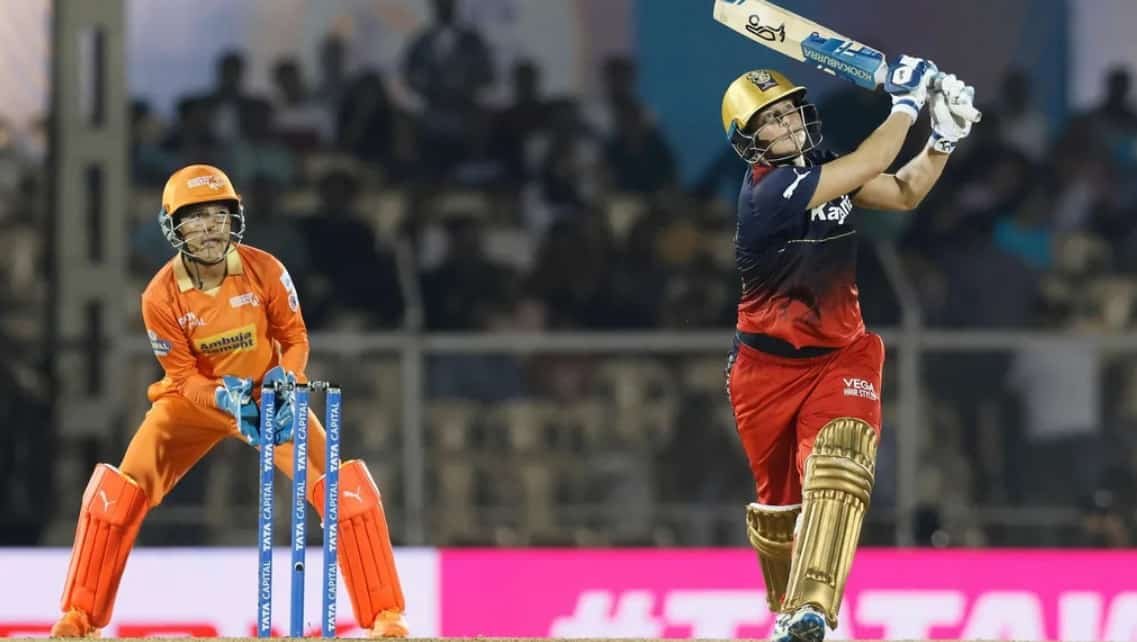
- The longest six in women’s cricket history belongs to New Zealand’s Sophie Devine. Playing for Royal Challengers Bangalore in the inaugural Women’s Premier League, she launched a delivery 94 meters against UP Warriorz. That’s not just clearing the rope—that’s clearing everything.
- Devine is known for her ability to generate bat speed without losing shape. When she connects properly, the ball doesn’t just go up. It goes up and keeps going. That WPL match showcased exactly why she’s considered one of the most destructive hitters in the game. The bowler had no answer. The fielders could only watch.
Shafali Verma’s 91-Meter Statement
- Three meters behind Devine sits Shafali Verma’s incredible 91-meter hit. Also from WPL 2023, Verma was batting for Delhi Capitals against Gujarat Giants when she produced this gem. At just 19 years old during that tournament, she showed maturity beyond her years—and power that belied her frame.
- Shafali’s approach is refreshingly simple. She backs herself to hit through the line. If the ball’s in her zone, she goes after it. That confidence is what separates good hitters from great ones. Her six that day set the tone for Delhi’s innings and reminded everyone why she opens the batting for India across formats.
Ayesha Naseem’s World Cup Heroics
- Pakistan’s Ayesha Naseem makes this list twice, both times from the 2023 Women’s T20 World Cup. Her 81-meter six against India stands out not just for distance but for context. Playing against your biggest rivals, in a World Cup match, under pressure—and still managing to swing freely? That takes nerve.
- Her second entry, a 79-meter hit against Ireland, proved it wasn’t a fluke. Naseem has genuine power. For Pakistan, who’ve often struggled for consistent firepower, having someone capable of clearing the ropes like this is invaluable. These weren’t just big sixes. They were momentum-shifters.
Pooja Vastrakar Against Australia
- India’s all-rounder Pooja Vastrakar matched Naseem’s 81 meters during the 2022 Women’s Cricket World Cup. The opponent? Australia. The context makes this special. Australia’s bowlers don’t give you room. They don’t bowl bad balls. Yet Vastrakar found a way to generate enough leverage and power to send one 81 meters.
- Vastrakar is primarily a bowler who can bat. But on that day, she showed she’s got serious hitting ability. India needed quick runs in that situation, and she delivered. It’s one thing to hit sixes in domestic cricket. It’s another to do it against the best team in the world.
Laura Wolvaardt’s Timing Masterclass
- South Africa’s Laura Wolvaardt isn’t typically known as a power hitter. She’s elegant, technically correct, and relies on timing more than muscle. Which makes her 79-meter six in the 2023 T20 World Cup all the more impressive. Against Australia, no less.
- Wolvaardt proved you don’t always need brute force. When your timing is perfect, and you meet the ball under your eyes, physics does the rest. That six was pure class—no ugly swinging, no agricultural hoick. Just a clean swing and perfect connection.
Harmanpreet Kaur’s Longest Six
- While Harmanpreet Kaur doesn’t feature in the verified top-distance records, she deserves mention as one of India’s most consistent big hitters.
- Her ability to clear boundaries in pressure situations—particularly during the 2017 Women’s World Cup semi-final—has defined her career.
- She may not hold the distance record, but her impact on women’s power hitting is undeniable.
How This Compares to Men’s Cricket
For perspective, the longest six in IPL history is often cited as being hit by players like AB de Villiers and Chris Gayle, with distances ranging from 110 to 119 meters.
The longest six by men in cricket overall is believed to be around 158 meters, though verification on extreme distances can be inconsistent.
The gap exists, yes. But it’s narrowing.
Women’s cricket uses slightly lighter bats, and the average pace of bowling is lower, which affects ball speed off the bat.
But technique, fitness, and confidence have improved dramatically. Ten years ago, a 90-meter six in women’s cricket would’ve been unthinkable. Now it’s happened multiple times in a single season.
The WPL Effect on Power Hitting
It’s no coincidence that the two longest sixes in women’s cricket history came during the Women’s Premier League.
The WPL brought better pitches, faster outfields, and an environment that encourages aggressive batting.
When batters are backed by franchises and given the freedom to express themselves, they swing harder.
The league also brought together international stars, creating competition that pushes everyone to improve.
Sophie Devine and Shafali Verma hitting massive sixes isn’t just individual brilliance—it’s the result of a competitive ecosystem that rewards fearless cricket.
Expert Insight: Why Timing Beats Power
Coaches will tell you the same thing: a well-timed six travels further than a muscled one.
When you try to hit too hard, your shape breaks down. Your head falls away. The bat path gets longer and less controlled.
But when you trust your technique and let the bat flow through the ball, you generate more bat speed without losing balance.
That’s why players like Wolvaardt and Devine—who have solid techniques—can hit the ball as far as anyone.
They’re not just swinging wildly. They’re using their entire body to generate force, transferring weight efficiently, and making contact in the right part of their swing arc.
Fastest Ball in Women’s Cricket History
While we’re discussing power, it’s worth noting that speed exists on both sides of the contest.
The fastest ball in women’s cricket history was bowled by India’s Shikha Pandey at 132 km/h. Australia’s Tayla Vlaeminck has also been clocked above 130 km/h.
When batters face that kind of pace and still manage to hit sixes, it amplifies the achievement.
Frequently Asked Questions
- What is the longest six in women’s cricket history?
The longest confirmed six is 94 meters, hit by Sophie Devine in WPL 2023 while playing for RCB against UP Warriorz.
- Who hit the longest six in Women’s cricket WPL?
Sophie Devine holds the WPL record at 94 meters, with Shafali Verma’s 91-meter six coming in second.
- How is the distance of a six measured?
Ball-tracking technology calculates where the ball was struck and where it first landed, measuring the straight-line distance between those two points.
- Has anyone hit a 100-meter six in women’s cricket?
No verified 100-meter six has been recorded in women’s cricket yet, though technology and skill levels continue to improve.
- Which tournament has seen the most long sixes?
The 2023 Women’s T20 World Cup and the inaugural WPL both featured multiple sixes over 75 meters, showcasing the evolution of power hitting.
The Future of Power Hitting
Women’s cricket is only getting stronger. Fitness standards are rising. Bat technology keeps improving.
Most importantly, young players are growing up watching Devine, Shafali, and others launch massive sixes.
They’re learning that boundaries aren’t just something you nudge the ball to—they’re something you clear.
The 94-meter mark won’t stand forever. Someone will hit it further. Maybe during the next WPL. Maybe at a World Cup.
But when that record falls, it won’t diminish what these players have achieved. They’ve shown what’s possible.
They’ve inspired the next generation. And they’ve proven that women’s cricket deserves to be watched for its power, skill, and entertainment value—not just as a novelty, but as elite sport in its own right.
Also Check:
- Best Women Cricket Umpires In The World
- Best Swing Bowlers in Women Cricket History
- Richest Women Cricketers in The World
- Women’s Premier League WPL Winners List
- WPL Purple Cap Winners List
About the Author