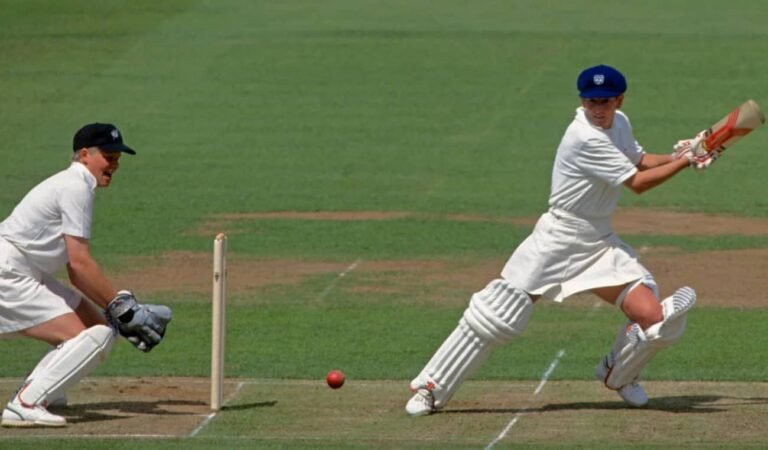
South Africa vs India. Cape Town Test. The batter taps a quick single to mid-off. The fielder swoops, throws, and hits directly.
The third umpire reviews. Frame by frame, the replay shows the batter’s bat hovering millimeters above a white line when the stumps break. Out. The crowd gasps.
That white line isn’t decoration. It’s the popping crease, one of several lines that control every dismissal, every legal delivery, and every close call in cricket.
But most fans don’t know how many of these lines exist or why they matter.
How Many Creases Are There in Cricket?
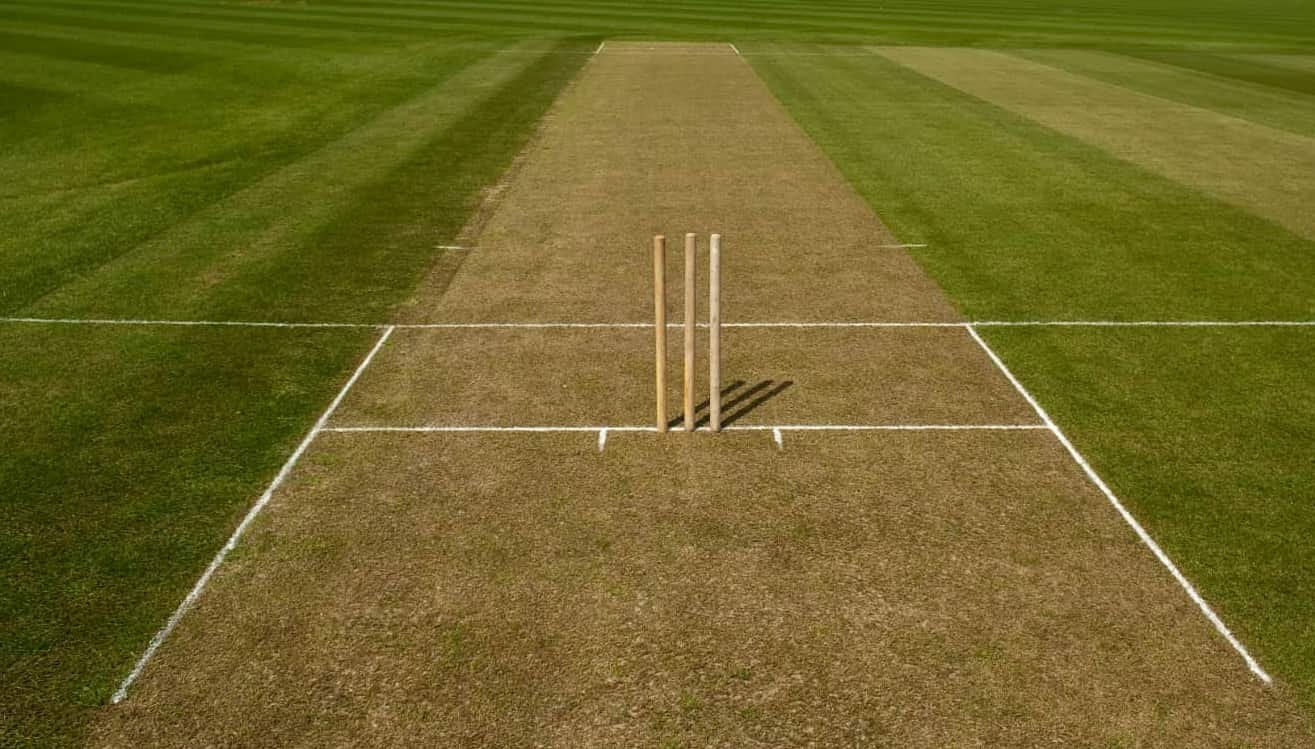
If you’ve ever wondered about the markings on a cricket pitch, this guide explains how many creases are there in cricket, what each line does, and why they’re critical to the game.
What Is a Crease in Cricket?
A crease is a white line painted on the pitch. It acts as a boundary that controls where players can move and helps umpires make accurate decisions.
For batters, these lines mark safe zones. Ground your bat behind the right line, and you’re protected. Step out carelessly, and you risk getting stumped or running out.
For bowlers, creases define legal delivery areas. Land your front foot over the line, and it’s a no-ball. Position your back foot incorrectly, and the umpire calls it illegal.
Without these lines, cricket would be unplayable. Umpires couldn’t judge dismissals fairly. Bowlers could deliver from anywhere. The game would collapse into chaos.
These markings aren’t cosmetic. They’re the structural foundation of cricket’s rules.
The Count: Creases on a Cricket Pitch
There are eight creases on every cricket pitch worldwide.
This number applies whether you’re watching a Test at Headingley, an ODI at the Adelaide Oval, or a T20 at the Wankhede.
The format doesn’t change it. The country doesn’t matter. Every regulation pitch has exactly eight creases.
Here’s how they break down:
- 2 Popping Creases (one at each end)
- 2 Bowling Creases (one at each end)
- 4 Return Creases (two at each end)
That’s three different line types, repeated at both ends of the 22-yard strip. Each type controls a specific aspect of play.
The popping crease protects batters and monitors bowler legality. The bowling crease marks the stump placement. The return creases control back-foot positioning.
Whether it’s international cricket or the IPL, these eight lines are always present with identical dimensions.
The Types of Creases in Cricket Explained
Let’s examine each crease type individually. Understanding their roles transforms how you watch matches.
Popping Crease: Where Safety Begins
The popping crease is the most vital line for batters.
It sits 4 feet (1.22 meters) in front of the stumps and runs parallel to the bowling crease. This line decides whether a batter survives or gets dismissed during run-outs and stumpings.
When a close run-out goes upstairs, the third umpire checks one thing: was the batter’s bat or body grounded behind this line when the bails came off? Even a fraction of an inch matters.
Bowlers must also respect this boundary. If their front foot lands beyond it during delivery, the umpire signals a no-ball immediately.
The batting side receives an extra run. In limited-overs formats, the next ball often becomes a free hit where dismissal is impossible except by run-out.
Remember the 2015 World Cup semifinal? New Zealand vs South Africa. Grant Elliott hit the winning runs, but earlier in the innings, Faf du Plessis was run out by centimeters.
The replay showed his bat lifted just as the bails fell. That line decided South Africa’s tournament.
Bowling Crease
The bowling crease is where the stumps stand at both ends.
It measures 8 feet 8 inches (2.64 meters) in length and runs horizontally across the pitch. This line provides the foundation for both sets of stumps.
For bowlers, the front edge is crucial. Their front foot must land behind or on this line during delivery. Cross it, and the umpire calls a no-ball without hesitation.
Bowlers train relentlessly to maximize their stride without overstepping. A longer delivery stride generates more pace and bounce. But one inch too far wastes the delivery and gifts’ free runs.
During the 2007 World Cup final, Sri Lanka’s Lasith Malinga bowled Australia’s Matthew Hayden with a trademark yorker.
The crowd erupted. But replays showed Malinga had fractionally overstepped. The wicket was cancelled. Australia batted on.
Return Crease: The Overlooked Boundary
The return crease receives little attention but plays a critical role.
These vertical lines run on either side of the stumps. There are two at each end (four total). They extend perpendicular to the bowling crease.
A bowler’s back foot must land inside these boundaries during delivery. If the back foot touches or crosses the return crease, it’s a no-ball.
This rule prevents bowlers from delivering at extreme angles that create unfair advantages.
Without return creases, a fast bowler could position themselves almost at square leg and bowl from there.
Umpires monitor this on every ball. It’s subtle, but in tight matches, this detail can alter results.
Crease Dimensions and Specifications
Here’s a detailed breakdown of each crease type with precise measurements:
| Crease Type | Measurement Details | Main Function |
|---|---|---|
| Popping Crease | 4 feet from stumps, runs parallel | Safety zone for batters, no-ball line for bowlers |
| Bowling Crease | 8 feet 8 inches length, horizontal | Stump placement foundation, front-foot marker |
| Return Crease | Perpendicular lines flanking stumps | Back-foot boundary for legal deliveries |
These specifications follow ICC regulations globally. The cricket crease length in feet stays constant across all formats and nations.
A pitch in Bangalore has identical measurements to one in Manchester or Perth.
This standardization guarantees fairness. Players know exactly what to expect regardless of venue.
Do Crease Numbers Change Across Formats?
No. The answer to how many creases are there in cricket remains constant across all formats.
Many fans assume crease rules differ between Tests, ODIs, and T20s. They don’t. The eight creases maintain identical positions and measurements in every format.
What changes is how players approach them tactically, not the rules themselves.
- In Test Cricket:
Batters stay conservative around the crease. They rarely venture out unless facing slow bowling. The risk isn’t justified when building innings over multiple sessions.
- In ODI Cricket:
Batters occasionally step out to spinners to upset their length. But they stay calculated. A reckless dismissal can derail an innings’ momentum.
- In T20 Cricket:
Batters regularly charge down the pitch before the bowler releases. They leave the crease early to create hitting angles.
It’s aggressive, high-stakes cricket. If the bowler adjusts or bowls wide, the keeper can stump them effortlessly.
The IPL produces countless crease-related dismissals every season. MS Dhoni’s lightning-fast stumpings have claimed batters who stepped inches too far.
His awareness around the crease made him the most dangerous keeper in T20 history.
But the actual crease dimensions? Identical to Test cricket. How many creases are there in cricket T20 or IPL? Still eight, following universal standards.
Understanding “At the Crease” in Cricket Context
This phrase appears constantly during broadcasts and commentary.
When someone says a batter is “at the crease,” it means they’re currently batting.
They’re positioned near the popping crease, facing deliveries.
But the phrase signifies more than just physical location.
A batter who is “well settled at the crease” has found rhythm. They’re reading deliveries cleanly.
They’re scoring fluently without unnecessary risks. In Test cricket, this might mean batting six hours without a mistake.
In T20 formats, being settled means controlling tempo while staying aggressive. You’re punishing loose balls without throwing your wicket away recklessly.
The phrase captures both positioning and mental state. It reflects confidence, timing, and composure under pressure.
How Creases Influence Critical Match Situations?
Creases aren’t passive markings. They actively determine match outcomes.
For Batters:
- Staying behind the popping crease protects you from dismissals.
- Every millimeter counts when grounding your bat during tight singles.
- During stumpings, this line separates survival from walking off.
For Bowlers:
- Front foot must stay behind the popping crease throughout delivery.
- Back foot must land inside the return crease boundaries.
- Violate either, and you give away runs that can cost matches.
For Umpires:
- Creases provide reference points for judging every dismissal type.
- They determine run-outs, stumpings, and delivery legality.
- In marginal calls, replays zoom entirely on crease positioning.
One unforgettable moment: The 1999 World Cup semifinal between Australia and South Africa. Last over.
South Africa needed one run off three balls. Allan Donald was run out diving for the winning run.
His bat was inches short of the popping crease. Australia won. South Africa went home. That line changed World Cup history.
Expert Insight: Why Champions Master the Crease
Steve Waugh once said that great players develop instinctive crease awareness that others never achieve.
He wasn’t discussing technique or talent. He meant spatial sense and mental discipline.
Elite batters know their exact position relative to the popping crease without glancing down.
They sense it through repetition and muscle memory. When they dive during run-outs, their bat instinctively extends behind the line.
Similarly, world-class bowlers land their front foot precisely on the edge consistently.
They maximize delivery stride without overstepping. This precision develops through thousands of practice deliveries.
In pressure situations, players lacking crease discipline make critical errors. A bowler oversteps when taking a match-winning wicket.
A batter assumes safety without grounding their bat properly. These lapses decide championships.
The 2023 World Cup saw multiple matches decided by millimeters at the crease.
Players who respected boundaries survived. Those who didn’t pay immediately.
Crease mastery isn’t spectacular. It doesn’t make highlight packages. But it wins tournaments.
Mistakes Players Make Around the Crease
Even international professionals occasionally make crease-related errors.
- 1. Bat lifting during run-out attempts
Batters slide their bat across, but don’t keep it grounded. If it lifts when the bails come off, they’re dismissed.
- 2. Overstepping while chasing extra pace
Fast bowlers push for additional speed. They extend their stride. The front foot crosses by millimeters. The wicket doesn’t count.
- 3. Assuming safety without proper grounding
Batters dive desperately and assume they’re safe. But replays reveal their bat bounced at the critical moment. Out.
- 4. Neglecting back-foot placement
Bowlers concentrate so intensely on front-foot positioning that they forget their back foot. It lands outside the return crease. No-ball.
These mistakes happen at all levels, from club matches to World Cup finals.
FAQs
- How many creases are there in cricket in India?
There are eight creases on every pitch in India, following identical ICC standards applied worldwide.
- What is the cricket crease length in feet for the bowling crease?
The bowling crease measures 8 feet 8 inches in length and sits horizontally across the pitch.
- Do how many creases are there in cricket 2026 that differ from earlier years?
No. The number and dimensions remain unchanged. Cricket has maintained the same eight-crease system for decades.
- What happens if a bowler’s back foot crosses the return crease?
It’s called a no-ball. The delivery is illegal, and the batting team receives an extra run.
- Can a batter be safe if their bat touches the crease line?
No. The bat must be grounded completely behind the line. Touching the line counts as being outside the safe zone.
Wrapping Up
Understanding how many creases are there in cricket changes your viewing experience completely.
These eight lines govern precision, fairness, and decision-making at every level.
Next time you watch a match, focus on these markings. Notice how batters ground their bats during close singles.
Watch bowlers’ foot placement during delivery. These details matter more than most viewers realize.
Cricket isn’t just about powerful strokes and hostile bowling.
It’s equally about discipline, awareness, and respecting boundaries. The creases represent that precision perfectly.
Also Check:
About the Author