When England collapsed to 7/2 inside two overs against Thailand in 2020, most fans would’ve switched off.
But Nat Sciver and Heather Knight had other plans. What followed wasn’t just a recovery — it became the highest partnership in Women’s T20 World Cup history.
Partnerships tell you more about a match than individual scores ever could.
They show who held their nerve when the pressure was on, which teams understood the chase, and where games turned from tight contests into one-sided affairs.
Since the tournament began in 2009, certain stands have defined campaigns, shifted momentum, and set records that still hold today.
Highest Partnerships in Women’s T20 WC By Wickets
The Record That Stands Above All Others
The highest partnership for any wicket in the ICC Women’s T20 World Cup is 169 runs, set by Nat Sciver and Heather Knight for the third wicket against Thailand on 26 February 2020 in Canberra.
What makes it remarkable isn’t just the total. It’s the situation. England were 7/2 after barely two overs. Both openers gone for ducks.’
Thailand’s bowlers looked dangerous. Then Knight and Sciver walked in and rebuilt the innings from scratch.
Knight finished with 108 not out off 66 balls. Sciver made 59 not out off 52. Together, they added 102 runs in the final 10 overs alone.
Thailand had no answers as England posted a massive total and won comfortably.
This partnership didn’t just rescue England’s innings — it showed why they’re considered one of the most complete batting sides in women’s cricket.
Complete Breakdown: Highest Partnerships Across All Wickets
Here’s the full list of record partnerships by wicket in the Women’s T20 World Cup, updated through the 2024 edition.
| Wicket | Runs | Batters | Team | Opposition | Venue | Year |
|---|---|---|---|---|---|---|
| 1st | 163* | D van Niekerk, L Lee | South Africa | Pakistan | Sylhet | 2014 |
| 2nd | 131 | S Luus, L Lee | South Africa | Thailand | Canberra | 2020 |
| 3rd | 169* | NR Sciver, HC Knight | England | Thailand | Canberra | 2020 |
| 4th | 134 | J Rodrigues, H Kaur | India | New Zealand | Providence | 2018 |
| 5th | 118 | DJS Dottin, SF Daley | West Indies | South Africa | Basseterre | 2010 |
| 6th | 68 | KL Rolton, AJ Blackwell | Australia | South Africa | Taunton | 2009 |
| 7th | 58 | A Shrubsole, S Dunkley | England | West Indies | Gros Islet | 2018 |
| 8th | 37 | Tuba Hassan, Fatima Sana | Pakistan | England | Cape Town | 2023 |
| 9th | 28 | Nashra Sandhu, Fatima Sana | Pakistan | Sri Lanka | Sharjah | 2024 |
| 10th | 20 | Batool Fatima, Almas Akram | Pakistan | India | Taunton | 2009 |
Opening Partnerships That Set the Tone
Van Niekerk and Lee’s Unbroken Masterclass (163*)
Dane van Niekerk and Lizelle Lee put on 163 runs without being separated against Pakistan in Sylhet, 2014.
It remains the highest opening partnership in T20 World Cup history — men’s or women’s.
Van Niekerk was only 20 at the time. She scored 90 not out while Lee made 60 not out.
South Africa chased down the target without losing a single wicket. That’s complete dominance.
Lee would go on to smash the highest individual score in WBBL history — 150 runs — and was recently picked by Delhi Capitals at the WPL 2026 auction for INR 30 lakh.
Her ability to accelerate from ball one made her one of the most destructive openers in women’s T20 cricket.
What’s interesting about this partnership is how South Africa batted Pakistan out of the contest before the game even got competitive.
When openers don’t get out, bowling teams struggle to find rhythm. Van Niekerk and Lee understood that perfectly.
Luus and Lee Do It Again (131 for 2nd Wicket)
Lizelle Lee appears twice in the top 10.
Her second-wicket stand with Sune Luus of 131 runs came against Thailand in 2020. Lee anchored while Luus played the aggressor.
South Africa reached the semi-finals that year and pushed Australia hard in the group stage.
Their batting depth was a major reason. Luus, who later became South Africa’s captain, showed her range in this partnership — rotating strike, finding gaps, and keeping pressure on Thailand’s inexperienced bowlers.
Middle-Order Stands That Turned Games Around
Harmanpreet and Jemimah’s Historic Stand (134 for 4th Wicket)
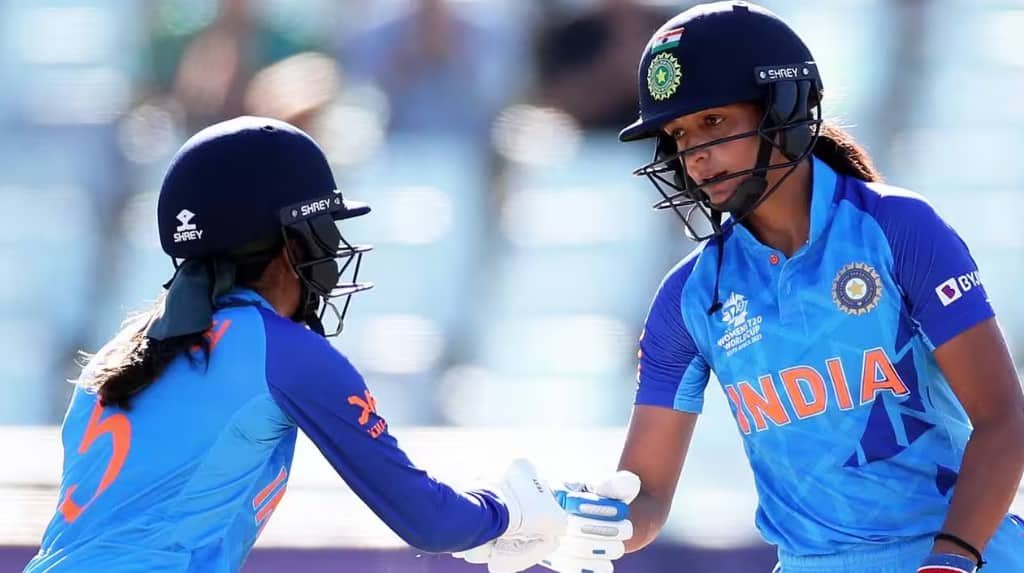
Harmanpreet Kaur’s 103 off 51 balls against New Zealand in 2018 was the first T20I century by an Indian woman.
But she didn’t do it alone. Jemimah Rodrigues, just 18 years old, contributed crucial runs in their 134-run partnership.
This match was played at Providence, West Indies.
India were under pressure early, but Harmanpreet shifted gears in a way only she can.
Jemimah played the perfect supporting role — rotating strike, giving Harmanpreet the strike when needed, and keeping the scoreboard ticking.
For Indian fans, this partnership holds special meaning.
It helped India reach the semi-finals and showed the world that India had firepower to match any team.
Both players went on to star in India’s 2025 ODI World Cup triumph, where they built a 167-run stand against Australia in the semi-final.
Dottin and Daley’s Explosive Fifth-Wicket Partnership (118)
Deandra Dottin is one of the most explosive batters women’s cricket has ever seen.
Her 118-run stand with Shanel Daley for the fifth wicket came during the 2010 Women’s T20 World Cup at Basseterre.
Dottin later became famous for hitting the fastest T20I century in women’s cricket — just 38 balls.
Her power-hitting changed how teams thought about T20 batting. Daley, meanwhile, played the anchor role perfectly, allowing Dottin to take risks without worrying about a collapse.
West Indies went on to win the T20 World Cup in 2016, and partnerships like this one laid the foundation for that success.
Lower-Order Fightbacks: Pakistan’s Resilience
One pattern stands out in this list: Pakistan holds three of the top 10 records, all for lower-order partnerships (8th, 9th, and 10th wickets).
Fatima Sana appears in two of them. Her 37-run stand with Tuba Hassan for the eighth wicket against England in 2023 showed Pakistan’s refusal to give up, even when the top order failed.
Then she added 28 with Nashra Sandhu for the ninth wicket against Sri Lanka in 2024.
Lower-order partnerships don’t often make headlines, but they can change match outcomes.
An extra 30 runs from positions 8, 9, or 10 can mean the difference between defending a total and falling short.
Pakistan’s tail has consistently punched above its weight in World Cups.
The 10th-wicket record — 20 runs by Batool Fatima and Almas Akram against India in 2009 — might seem small, but it came in a high-stakes India-Pakistan clash. Every run mattered.
Tactical Insight: Why These Partnerships Matter
Big partnerships in T20 cricket don’t happen by accident. They require clear thinking under pressure.
First, there’s the strike rotation.
When both batters can find singles and twos consistently, the bowling side struggles to build pressure.
Van Niekerk and Lee did this perfectly — they didn’t need to take risks because they were scoring fast enough through smart placement.
Second, there’s role clarity. In most big partnerships, one batter anchors while the other attacks. Knight played anchor to Sciver’s aggression.
Jemimah did the same for Harmanpreet.
When both batters try to dominate at once, partnerships usually break down.
Third, there’s match awareness.
Sciver and Knight knew England needed a big total after losing both openers.
They didn’t panic. They rebuilt carefully, then accelerated hard in the death overs. That kind of game sense separates good partnerships from great ones.
How These Records Compare Across Formats
If you’re wondering how these partnerships stack up against other formats, here’s some context.
The highest 7th wicket partnership in ODI cricket is 189 runs by Mohammad Ashraful and Mahmudullah for Bangladesh.
That shows how much longer partnerships can build in 50-over cricket.
The highest 1st wicket partnership in women’s T20 is 163*, which we’ve already covered.
But in ODIs, the highest 1st wicket partnership in ODI cricket overall is 304 runs by Imam-ul-Haq and Fakhar Zaman for Pakistan.
In Test cricket, the highest partnership in Test matches is 624 runs between Kumar Sangakkara and Mahela Jayawardene for Sri Lanka.
The longer format allows batters to bat for days, not overs.
T20 partnerships are harder to build because there’s no time to settle. Every delivery counts.
That’s why 169 runs in a T20 match feels almost impossible.
Star Performers and Milestones
Looking at individual achievements, several players stand out.
- T20 Women’s Cricket highest score player: Heather Knight’s 108* against Thailand is one of only a handful of centuries in Women’s T20 World Cup history. It came in a match-defining partnership and remains one of the tournament’s finest individual knocks.
- Most sixes in women’s T20 Cricket: Deandra Dottin holds numerous power-hitting records, and her ability to clear boundaries consistently made her partnerships so dangerous. Bowlers couldn’t afford to miss their lengths even slightly.
- Most 50 in Women’s t20 cricket: Players like Suzie Bates, Meg Lanning, and Harmanpreet Kaur have racked up multiple fifties across their T20 careers. Consistency at this level requires technique, temperament, and the ability to build partnerships under pressure.
What to Expect in the 2026 Women’s T20 World Cup
The 2026 Women’s T20 World Cup begins on 12 June in England and Wales. With home conditions and a strong squad, England will fancy their chances of adding to their tally.
But South Africa, India, Australia, and the West Indies all have batting lineups capable of breaking these records.
New Zealand, fresh off their maiden title win in 2024, will also be dangerous.
Expect faster outfields, shorter boundaries in some venues, and bowlers under serious pressure.
If conditions favor batting, we could see new partnerships enter this list.
Players like Nat Sciver-Brunt (England’s current T20 captain), Smriti Mandhana, Laura Wolvaardt, and Alyssa Healy are all capable of building massive stands.
The 169-run record might stand for years — or it might fall in the first week of the tournament.
Frequently Asked Questions
- What is the highest partnership in the Women’s T20 World Cup?
The highest partnership is 169 runs by Nat Sciver and Heather Knight for England’s third wicket against Thailand in 2020.
- Which team has the most partnership records in the Women’s T20 World Cup?
Pakistan holds three lower-order partnership records (8th, 9th, and 10th wickets), while South Africa and England feature prominently in the top-order records.
- Who has scored the most fifties in Women’s T20 cricket?
Players like Suzie Bates, Meg Lanning, and Harmanpreet Kaur have the most half-centuries in women’s T20 internationals across all competitions.
- What is the highest opening partnership in T20 World Cup history?
The highest opening partnership in the Women’s T20 World Cup is 163* by Dane van Niekerk and Lizelle Lee for South Africa against Pakistan in 2014.
- Has any batter scored multiple centuries in Women’s T20 World Cups?
Very few players have scored even one century in Women’s T20 World Cups. Heather Knight’s 108* against Thailand is one of the rare instances. Lizelle Lee also scored a century during the 2020 tournament.
Final Thoughts
Partnerships are where T20 matches are won.
Individual brilliance catches the eye, but it’s the stands between two batters that shift momentum, build totals, and break bowling attacks.
From Sciver and Knight’s record-breaking rescue at 7/2 to van Niekerk and Lee’s flawless opening stand, these partnerships capture what makes the Women’s T20 World Cup so compelling.
They aren’t just numbers on a stats page — they’re stories of pressure, resilience, and smart cricket.
With the 2026 edition approaching, fans have every reason to believe these records could change.
New stars are emerging. Batting conditions are improving. And the quality of women’s cricket continues to rise.
Whether these records stand or fall, one thing’s certain: the partnerships that define the next World Cup will be worth watching.
Also Check:
About the Author