On a quiet afternoon in Deventer on July 9, 2008, Netherlands Women walked off the field having scored just 22 runs. Twenty-two.
That’s fewer runs than most teams score in a single over during a modern powerplay.
It remains the lowest team total ever recorded in Women’s ODI cricket, and it hasn’t been touched in nearly two decades.
These collapses aren’t just numbers in a record book.
They’re moments when everything that could go wrong did go wrong—when bowlers found unplayable lines, when batters froze under pressure, and when partnerships never even got started.
From 1982 to as recently as October 2025, these innings tell the story of cricket at its most ruthless.
Lowest Team Total in Women’s ODI History
What Makes a Total This Low?
You don’t get bowled out for 22 or 26 by accident.
These aren’t just bad days at the office—they’re complete systemic breakdowns.
Usually, it’s a combination of high-class bowling, difficult pitch conditions, and a batting order that couldn’t find any rhythm whatsoever.
When Netherlands managed only 22 in 23.4 overs, their run rate was 0.92.
That means for every over bowled, they averaged less than one run.
West Indies bowlers didn’t just restrict them—they suffocated every attempt to score.
Japan Women faced 34 full overs in 2003 and still only made 28 runs. That’s 204 deliveries for 28 runs. The mental pressure alone in that situation is extraordinary.
The Complete List of Women’s ODI’s Lowest Team Totals
Here’s how the ten worst batting collapses in Women’s ODI history unfolded, with every key detail that shaped these results.
| Team | Score | Overs | Run Rate | Opposition | Venue | Date |
|---|---|---|---|---|---|---|
| Netherlands Women | 22 | 23.4 | 0.92 | West Indies Women | Deventer | 9 Jul 2008 |
| Pakistan Women | 23 | 24.1 | 0.95 | Australia Women | Melbourne | 7 Feb 1997 |
| Scotland Women | 24 | 21.3 | 1.11 | England Women | Reading | 10 Aug 2001 |
| India Women | 26 | 19.1 | 1.35 | New Zealand Women | St Saviour | 11 Jul 2002 |
| Pakistan Women | 27 | 13.4 | 1.97 | Australia Women | Hyderabad | 14 Dec 1997 |
| Japan Women | 28 | 34.0 | 0.82 | Pakistan Women | Amsterdam | 21 Jul 2003 |
| Netherlands Women | 29 | 25.1 | 1.15 | Australia Women | Perth | 29 Nov 1988 |
| PNG Women | 33 | 15.4 | 2.10 | UAE Women | Port Moresby | 17 Oct 2025 |
| Netherlands Women | 36 | 16.3 | 2.18 | South Africa Women | Savar | 18 Nov 2011 |
| India Women | 37 | 35.0 | 1.05 | New Zealand Women | Auckland | 14 Jan 1982 |
Every single team on this list lost their match. Not one managed to defend or chase down their total. These are the innings where batting orders offered no resistance whatsoever.
Breaking Down the Historic Collapses
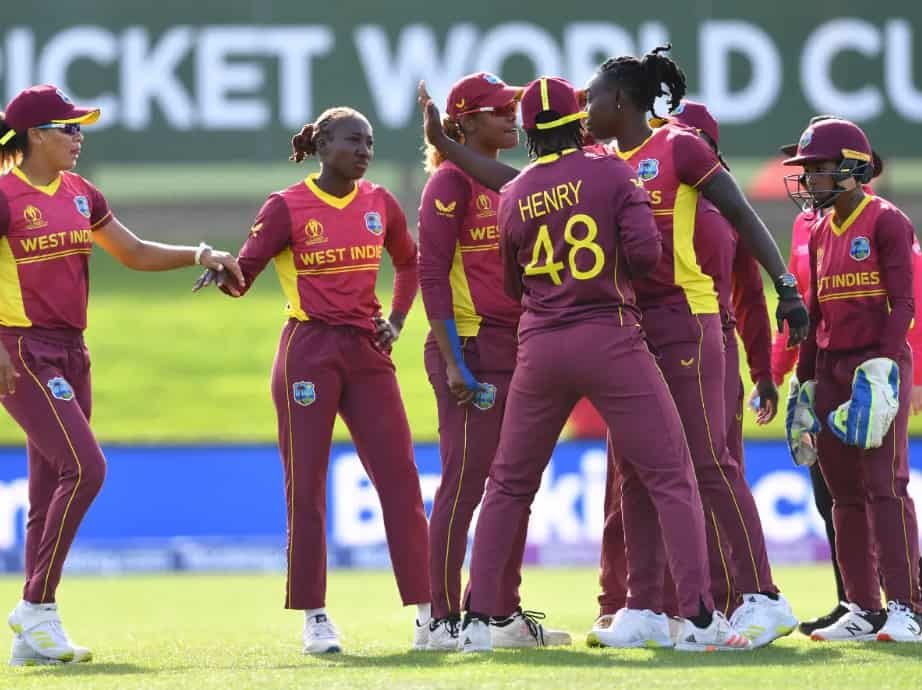
Netherlands Women – 22 vs West Indies (2008)
This is the benchmark. The lowest score in women’s ODI cricket history happened in Deventer, and it’s stood unchallenged for 17 years now.
Netherlands batted first and were dismissed for 22 in just 23.4 overs.
West Indies bowlers didn’t just win the match—they obliterated any chance of competition.
A single six and a boundary would’ve taken Netherlands to 16 runs, more than halfway to their final total.
The run rate of 0.92 is almost incomprehensible in modern cricket.
This remains the lowest team total in women’s ODI history and might never be broken.
Pakistan Women – 23 vs Australia (1997, Melbourne)
Pakistan’s 23 in Melbourne came during a brutal period for their women’s programme.
Australia bowled them out in 24.1 overs, and Pakistan’s run rate of 0.95 shows they barely managed a run per over.
This wasn’t a competitive match—it was a mismatch that exposed how wide the gap was between established and emerging nations in the late 1990s.
Scotland Women – 24 vs England (2001)
Scotland lasted just 21.3 overs against England in Reading.
They batted second and couldn’t build a single meaningful partnership.
England’s bowlers had them 24 all out with plenty of time to spare, which tells you how quickly the wickets tumbled.
For Scotland, this remains their worst-ever performance in ODI cricket.
India Women – 26 vs New Zealand (2002)
India’s collapse in St Saviour, Jersey, is one of the most shocking entries on this list.
They were dismissed for 26 in just 19.1 overs.
By today’s standards, with India Women being one of the strongest teams in world cricket, this result feels impossible.
But in 2002, they were still building, and New Zealand’s bowlers made sure they never got started.
Pakistan Women – 27 vs Australia (1997, Hyderabad)
Pakistan appears twice in the top five, both times against Australia, both in 1997.
This collapse in Hyderabad was even faster than their Melbourne disaster—they lasted only 13.4 overs.
Australia Women were absolutely dominant in that era, and these results show just how ruthless they could be against developing teams.
Japan Women – 28 vs Pakistan (2003)
Japan batted through all 34 overs and still only managed 28 runs. Let that sink in.
Their run rate of 0.82 is the lowest on this entire list. They faced 204 deliveries and scored 28.
That’s an average of one run every 7.3 balls.
Japan were in the early stages of international cricket in 2003, and this innings reflects how steep the learning curve was.
Netherlands Women – 29 vs Australia (1988, Perth)
This was the Netherlands’ first appearance in this top 10, back in 1988.
They managed 29 in 25.1 overs against Australia in Perth.
The gap between the two teams was massive, and this result proved it.
Netherlands would go on to record even lower totals later, but this 29 was a sign of things to come.
PNG Women – 33 vs UAE (2025)
The most recent entry on this list happened in Port Moresby just last year.
PNG were bowled out for 33 in 15.4 overs by UAE Women.
What makes this notable is that it happened at home for PNG and against a team that isn’t ranked among the elite.
It shows that low totals can still happen at any level, in any era.
Netherlands Women – 36 vs South Africa (2011)
Netherlands appear three times in this top 10—more than any other nation.
This time they managed 36 in 16.3 overs against South Africa in Savar.
It was another rapid collapse, though slightly less severe than their previous entries.
Still, it shows a pattern of struggling against stronger opposition during that period.
India Women – 37 vs New Zealand (1982, Auckland)
India’s 37 in Auckland was one of the earliest collapses on record.
They batted through 35 overs but could only muster 37 runs.
That’s a run rate of just 1.05 across the entire innings.
This was Women’s ODI number 37, and it came during an era when India Women were still finding their feet on the international stage.
Lowest Total in Women’s ODI World Cup
World Cup pressure can make bad situations worse.
The lowest total in women’s ODI World Cup history is Pakistan’s 42 against Australia during the 1997 tournament.
While it doesn’t make the overall top 10, it remains the worst batting performance on cricket’s biggest stage for women.
Tournament cricket adds another layer of pressure, and when teams collapse under it, the numbers can get ugly fast.
Lowest Score in Women’s T20 International
If you think these ODI totals are low, Women’s T20 cricket has seen even worse.
Mali Women were bowled out for just 6 runs against Rwanda in a T20I, which stands as the lowest score in women’s T20 international cricket.
The format’s shorter boundaries and aggressive nature sometimes make collapses even more extreme.
How India Women’s Lowest Score Compares
India women lowest score in ODI is 26, recorded against New Zealand in 2002. That puts them fourth on the all-time list.
What’s remarkable is how far India Women have come since then.
Today, they’re ranked among the top three sides in the world, regularly posting totals above 250 and competing in World Cup finals.
The contrast between that 26 and their current strength shows the growth of the entire women’s game over the past two decades.
Tactical View: Why Teams Collapse This Badly
From a tactical perspective, these collapses usually involve three factors working together:
- Bowling discipline: When bowlers find consistent lines and lengths, batting becomes survival mode rather than run-scoring
- Pitch assistance: Seam movement, uneven bounce, or spin-friendly surfaces can turn good deliveries into unplayable ones
- Mental pressure: Once three or four wickets fall cheaply, the remaining batters start playing with fear rather than intent
Australia women lowest score in odi 2025 hasn’t been recorded yet, but historically, even the strongest teams have moments of vulnerability.
The difference is how rarely it happens to them compared to developing nations.
How These Scores Compare to Men’s Cricket
The lowest score in ODI by a team in men’s cricket is Zimbabwe’s 35 against Sri Lanka in 2004.
Pakistan’s lowest score in ODI is 43 against the West Indies in 1993.
The lowest score in ODI World Cup for men is Canada’s 36 against Sri Lanka in 2003.
What’s interesting is that the gap between men’s and women’s lowest totals isn’t as wide as you might think.
Batting collapses happen across all formats and genders when conditions align against the batting side.
Frequently Asked Questions
- What is the lowest team total in Women’s ODI history?
Netherlands Women’s 22 against West Indies in 2008 is the lowest team total ever recorded in Women’s ODI cricket.
- Which team appears most often in the lowest totals list?
Netherlands Women appear three times in the top 10 lowest totals, more than any other nation.
- Has any team scored below 30 in the last five years?
Yes, PNG Women scored 33 against UAE Women in October 2025, which is the most recent entry in the top 10.
- What is India Women’s lowest ODI score?
India Women’s lowest score is 26, made against New Zealand in St Saviour in 2002.
- Can a team win after being bowled out for under 40?
No. Every team in the top 10 lowest totals lost their match. Totals that low are never defendable.
When Numbers Tell the Story of Complete Collapse
The lowest team total in women’s ODI history isn’t just a number—it’s a reminder of how quickly cricket can turn against you.
From Netherlands’ 22 in 2008 to PNG’s 33 in 2025, these innings span over 40 years and show that batting collapses can happen to anyone, anywhere, at any time.
They’re permanent markers in the history of women’s cricket, proof that even at the highest level, sometimes bowling just wins completely.
And when that happens, the scoreboard doesn’t lie.
Also Check:
About the Author