Women’s cricket has grown exponentially over the past decade, and so has the quality of officiating.
The umpires standing at square leg and behind the stumps today aren’t just making decisions—they’re setting standards.
They’ve moved beyond regional tournaments into men’s cricket, World Cup finals, and neutral appointments that test their judgment under the harshest scrutiny.
These women have proven that excellent umpiring comes down to knowledge, consistency, and the ability to read the game.
Gender doesn’t determine whether you can spot a no-ball or judge an LBW appeal correctly. What matters is how many matches you’ve stood through, how well you understand tactical context, and whether captains and match referees trust your decisions when pressure builds.
Best Women Cricket Umpires In The World
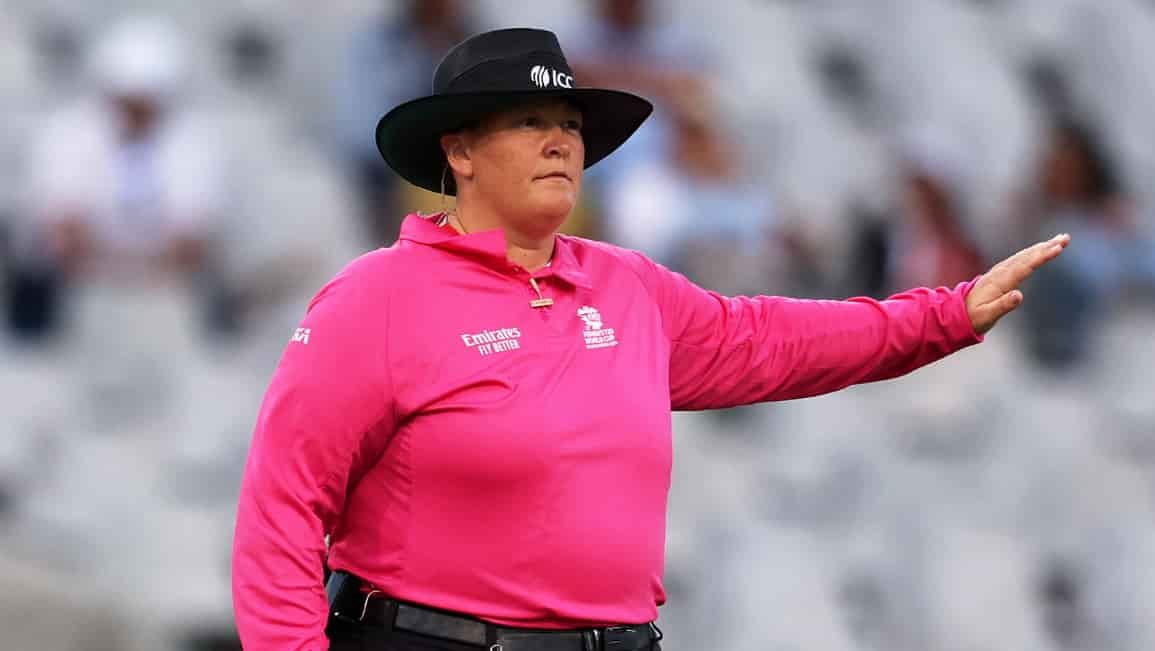
Best Women Cricket Umpires In The World
Who Are the ICC Best Women Cricket Umpires in the World?
When you look at the ICC’s appointments for major tournaments, the same names keep appearing.
That’s not coincidence—it’s recognition. The International Cricket Council doesn’t hand out World Cup appointments based on quotas or token representation.
They assign umpires who have proven themselves across formats, across conditions, and across years of consistent performance.
The best women cricket umpires in the world have accumulated experience that would intimidate most officials.
They’ve umpired in sweltering heat in the Caribbean, under lights in Australia, and on spinning tracks in India. They’ve handled close finishes, controversial dismissals, and matches where every decision gets replayed in slow motion on giant screens.
Claire Polosak – The Record Holder
- Polosak holds more international women’s matches than any other currently active female umpire. As of early 2024, she’s officiated 49 women’s ODIs, 68 women’s T20Is, and three women’s Tests. That volume alone speaks to her consistency and the trust the ICC places in her abilities.
- But numbers don’t tell the full story. She became the first woman to umpire a men’s ODI—a barrier-breaking moment that put her under intense scrutiny. Men’s cricket operates at a different level of public attention, and one poor decision can dominate headlines. Polosak handled it.
- She was part of the all-female umpiring panel for the ICC Women’s Cricket World Cup 2025, umpiring a semi-final and a group stage match. Semi-finals carry enormous pressure. One wrong call can change the trajectory of a team’s campaign. The ICC wouldn’t assign those matches to someone they didn’t fully trust.
Jacqueline Williams – The World Cup Final Umpire
- Williams brings a rare combination of experience and big-match temperament. She’s umpired 46 women’s ODIs and 85 women’s T20Is, and she’s also stood in five men’s ODIs, including neutral matches and ICC events. She’s been on the ICC Development Panel since 2019, a position that reflects sustained high-level performance.
- Her appointment to the ICC Women’s World Cup 2025 final tells you everything. Finals aren’t training grounds—they’re the culmination of years of preparation. Every decision gets analyzed, debated, and replayed. Williams earned that appointment through consistency over time.
- She also became the first West Indies woman umpire to officiate a men’s T20I between full member nations. That’s significant. Men’s T20Is move fast, with split-second decisions on run-outs, stumpings, and boundary catches. Williams proved she could keep pace.
Lauren Agenbag – The Young Prodigy
- Agenbag has umpired approximately 85 women’s T20Is, 32 women’s ODIs, and 11 men’s T20Is. That’s substantial experience across formats and genders, but what sets her apart is when she achieved certain milestones.
- She became the youngest umpire to officiate a Cricket World Cup final in 2022. Think about that. The World Cup final is the most scrutinized match in the sport, and she was trusted with it at an age when most umpires are still building domestic experience.
- She was also the first South African woman to umpire an international T20I match in 2019, breaking ground for women in her country. Her appointment to the ICC Women’s Cricket World Cup 2025 panel showed that her early success wasn’t a fluke—it was a sign of things to come.
| Umpire | Country | Women’s ODIs | Women’s T20Is | Notable Achievement |
|---|---|---|---|---|
| Claire Polosak | Australia | 49 | 68 | First woman to umpire men’s ODI |
| Jacqueline Williams | West Indies | 46 | 85 | Umpired 2025 World Cup final |
| Lauren Agenbag | South Africa | 32 | 85 | Youngest World Cup final umpire |
| Kim Cotton | New Zealand | 32 | 76 | First NZ woman in men’s T20I |
| Sue Redfern | England | Various | Various | Former international player |
Kim Cotton – New Zealand’s Trailblazer
- Cotton has officiated 76 women’s T20Is, 32 women’s ODIs, and 10 men’s T20Is. She’s been part of the official umpiring panels for both the 2022 and 2025 World Cups, which demonstrates sustained excellence rather than a one-off selection.
- She was the first New Zealand woman umpire to stand in a full-member men’s T20I. That format doesn’t give you time to think. Decisions happen in milliseconds—front-foot no-balls, tight run-outs, catches claimed at the boundary. Cotton handled it and earned further appointments.
- At the 2025 Women’s Cricket World Cup, she was appointed as the third umpire for a semi-final. The TV umpire role carries unique pressure. You’re making decisions with slow-motion replays, multiple angles, and millions of viewers waiting. Cotton’s appointment to that role in a knockout match shows the level of trust she’s earned.
Sue Redfern – The Player Turned Umpire
- Redfern brings something most umpires don’t have—first-hand experience as an international cricketer. She played for England before transitioning into umpiring, giving her insight into player psychology and tactical decision-making that pure officials don’t possess.
- She’s been umpiring since 2015 and has earned appointments to numerous ICC matches, including the Women’s Cricket World Cup 2025, where she umpired a semi-final. That selection reflects consistency and reliability over nearly a decade.
- She’s also stood in men’s domestic first-class matches in England. First-class cricket demands concentration over long periods, deep rule knowledge, and the ability to manage player behavior across multiple sessions. Redfern has proven she can handle all of that.
What Makes a Top-Level Woman Umpire in Cricket?
- It’s not just about making the right call. Anyone can get an LBW decision correct with ball-tracking technology after the fact. The real skill is reading the game live, understanding context, and managing match situations.
- A good umpire knows when a bowler is trying to sneak an extra yard closer to the stumps on their delivery stride. They notice when a fielder at deep square leg is moving early, anticipating the shot. They understand when a captain is pushing boundaries on over rates or field placements.
- Expert Insight: The best umpires don’t just react to what happens—they anticipate it. They know the pitch. If it’s turning square on day four of a Test, they’re watching for bat-pad catches and close LBWs. If it’s a flat deck in a T20, they’re focused on boundary catches and run-outs. That tactical awareness separates competent officials from elite ones.
Women Umpires in the WPL and Domestic Cricket
- The Women’s Premier League has provided crucial experience for emerging umpires.
- The tournament brings high-quality cricket, intense scrutiny, and franchise pressure that mimics international conditions.
- WPL umpires face the same challenges as their male counterparts in the IPL—packed stadiums, television coverage, and owners who expect accurate officiating.
- Several Indian female umpires have gained valuable exposure through the WPL and domestic tournaments, building the foundation for future international appointments. The Indian female umpire list continues to grow as the Board of Control for Cricket in India invests in training and development programs.
South African Female Cricket Umpires: Leading the Way
- South Africa has produced exceptional female umpires, with Kerrin Klaaste and Lauren Agenbag standing out. Agenbag’s international achievements have been covered, but Klaaste has also made significant contributions at domestic and franchise level, helping build a pipeline of qualified officials.
- The South African female cricket umpire development pathway has become a model for other nations, combining formal training with practical match experience across formats.
Why Female Umpires at the Cricket World Cup Matter
- When you see a female umpire in a Cricket World Cup match, it represents more than individual achievement.
- It signals that the sport values competence over outdated assumptions about who can officiate elite cricket.
- The presence of women umpires at World Cups normalizes their role in the sport’s biggest moments. Young girls watching see a career path beyond playing. Administrators see proven officials who can handle pressure. Players see umpires who know the game deeply, regardless of gender.
Frequently Asked Questions
- Who is the best woman umpire in cricket?
Claire Polosak currently holds that distinction based on match volume, historic achievements, and consistent ICC appointments, including World Cup semi-finals and being the first woman to umpire a men’s ODI.
- Has a woman umpired in a men’s international match?
Yes. Claire Polosak umpired a men’s ODI, Jacqueline Williams has stood in multiple men’s T20Is, and several others including Lauren Agenbag and Kim Cotton have officiated men’s international matches.
- Who was the first woman umpire in India?
While several women have umpired domestic cricket in India, the development of Indian female umpires has accelerated significantly with the introduction of the Women’s Premier League.
- What is required to become an international cricket umpire?
Extensive domestic experience, passing ICC umpire examinations, physical fitness standards, and consistent performance that earns recommendations from national boards to the ICC panels.
- Do women umpires face different challenges than men?
The on-field challenges—making correct decisions under pressure—are identical. However, breaking into a historically male-dominated field and proving competence while facing extra scrutiny adds unique pressure.
Final Thoughts
The best women cricket umpires in the world have earned their positions through years of work, countless matches, and proven judgment under pressure.
They’ve moved beyond participation to excellence, officiating World Cup finals, men’s international matches, and high-stakes knockout games.
Their presence at cricket’s biggest moments isn’t symbolic—it’s deserved.
They’ve shown that umpiring quality isn’t determined by gender but by knowledge, consistency, and the ability to make split-second decisions correctly when everything is on the line. As women’s cricket continues to grow, so will the pool of exceptional umpires standing at square leg and behind the stumps, making the calls that keep the game fair.