When formats shrink, consistency becomes harder to maintain.
The Hundred strips away the cushion that longer innings provide. A batter gets fewer balls to settle, fewer overs to recover from a slow start, and almost no margin for error when the powerplay ends.
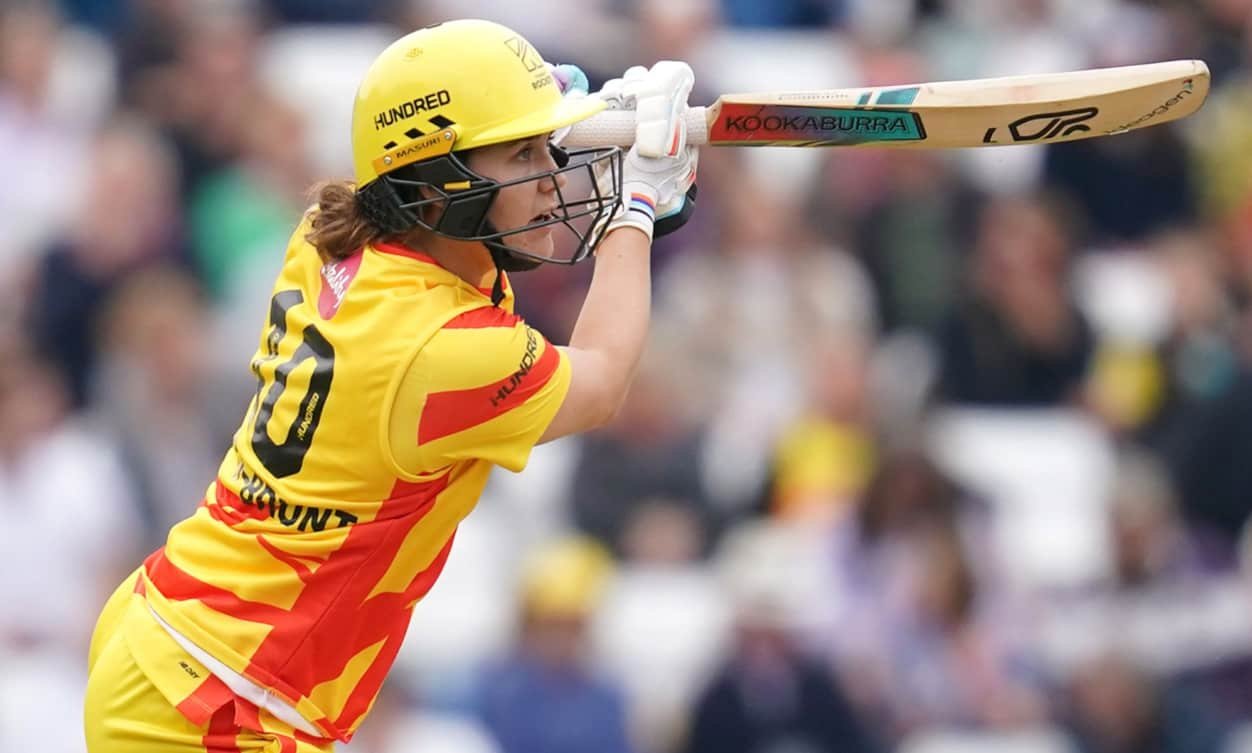
That’s why Nat Sciver-Brunt’s dominance in The Hundred Women’s Competition isn’t just about volume – it’s about repeating high-quality performances across 37 matches without fading.
Her 1,223 runs between 2021 and 2025 don’t just top the charts. They separate her from everyone else in terms of average, strike rate balance, and finishing ability.
Let’s break down who’s scored the most runs in The Hundred Women’s Competition, what their numbers actually mean, and why certain performances matter more than others in this format.
Most Runs In The Hundred Women’s Competition
Top Run-Scorers: The Complete List
Here’s the full breakdown of the leading batters in The Hundred Women’s Competition from 2021 to 2025, sorted by total runs:
| Player | Team | Matches | Runs | Average | Strike Rate | Fifties |
|---|---|---|---|---|---|---|
| Nat Sciver-Brunt | TR-W | 37 | 1223 | 45.29 | 139.77 | 10 |
| Danni Wyatt | SB-W | 43 | 1146 | 28.65 | 132.94 | 9 |
| Sophia Dunkley | SB-W/WF-W | 40 | 1065 | 31.32 | 128.62 | 7 |
| Laura Wolvaardt | MO-W/NSC-W/SB-W | 36 | 1036 | 38.37 | 125.12 | 5 |
| Tammy Beaumont | LS-W/WF-W | 36 | 825 | 25.00 | 121.86 | 2 |
| Marizanne Kapp | OI-W | 33 | 797 | 39.85 | 128.13 | 1 |
| Hayley Matthews | WF-W | 33 | 795 | 27.41 | 116.22 | 4 |
| Alice Capsey | OI-W | 40 | 793 | 22.65 | 129.36 | 6 |
| Bryony Smith | TR-W/WF-W | 38 | 754 | 19.84 | 130.67 | 3 |
| Maia Bouchier | SB-W | 43 | 750 | 23.43 | 125.83 | 1 |
Why Nat Sciver-Brunt Stands Apart
Sciver-Brunt’s 1,223 runs aren’t just the highest—they’re structurally different. An average of 45.29 in a 100-ball format means she’s getting out less than once every two matches on average.
That’s not luck. That’s control.
Her nine not-outs tell you she’s finishing games.
When the chase gets tight or the innings needs steering home, she’s there at the end. Her strike rate of 139.77 shows she isn’t blocking her way to that average either. She scores fast while staying in.
Compare that to other batters who crack 130+ strike rates but average in the low twenties.
They’re playing high-risk cricket that works sometimes. Sciver-Brunt plays high-tempo cricket that works consistently.
Team-Based Breakdown: Where the Runs Come From
Southern Brave leads the conversation when discussing the most runs in The Hundred Women’s Competition by team.
Danni Wyatt and Sophia Dunkley both represent the Brave in their peak seasons, combining for over 2,000 runs between them. Maia Bouchier adds another 750 from the same franchise.
Trent Rockets, anchored by Sciver-Brunt and Bryony Smith, also stack up well in aggregate scoring.
Oval Invincibles bring Marizanne Kapp and Alice Capsey into the mix—two very different profiles working the same middle order.
What’s interesting is how top-heavy the scoring is.
Most runs in The Hundred Women’s Competition all time come from a concentrated group.
Only 10 players have crossed 750 runs. The gap between elite consistency and impact performance is sharp.
Scoring Patterns: What Actually Works in This Format
If you’re averaging above 35 and striking above 125, you’re doing something right. That combination is rare. Only three players manage it: Sciver-Brunt, Wolvaardt, and Kapp.
Wolvaardt’s 90* remains the highest score among the 1,000-run group, but she’s more valuable for her ability to bat through without giving it away.
Eight not-outs across 35 innings show she knows when to anchor and when to attack.
Kapp’s 13 not-outs are the highest in the group.
That’s a finisher’s profile. She doesn’t pad her average with cheap runs at the top. She comes in during pressure moments and stays until the job’s done.
Then there’s Wyatt, who leads the competition in fours with 160.
That’s powerplay dominance. She sets the tone early, even if her average doesn’t reflect long innings.
In a format where the first 25 balls can decide the game, that kind of boundary-hitting matters.
Tammy Beaumont’s Century: The Outlier Performance
Beaumont’s 118 is the only century in the top 10 most runs in The Hundred Women’s Competition.
It’s also the highest individual score across this group.
But here’s the thing—she only has two other fifties across 36 matches. That century is an outlier, not a pattern.
Her average of 25.00 reflects more starts than conversions.
Still, when you’re chasing 160 and need someone to go big, Beaumont has shown she can do it. Just not as often as the others convert their starts.
What About Wicket-Takers?
Most wickets in The Hundred Women aren’t covered in this ranking, but it’s worth noting that players like Kapp and Matthews contribute heavily with the ball too.
Kapp’s dual role as finisher and wicket-taker makes her one of the most valuable players in the format.
If you’re comparing formats, most runs in The Hundred men’s follow similar patterns—high strike rates, compressed averages, and fewer centuries overall.
The 100-ball structure doesn’t reward slow accumulation.
Expert Insight: Why Strike Rate Alone Doesn’t Tell the Full Story
A 135 strike rate looks explosive. But if it comes with an average below 20, you’re getting out too often.
The best batters in The Hundred combine tempo with survival.
Take Alice Capsey. Her 129.36 strike rate is excellent, but her 22.65 average means she’s dismissed more frequently than someone like Wolvaardt, who strikes slower but lasts longer.
In a chase, you’d rather have Sciver-Brunt facing the last 20 balls than someone who might hit two sixes and get out.
Finishing ability matters more than peak power in tight games.
The Role of Not-Outs in Average Inflation
Not-outs boost averages significantly in short formats. Kapp’s 13 not-outs lift her average to nearly 40.
Without them, her numbers would look closer to Wyatt’s.
That doesn’t mean they’re empty stats. Finishing games unbeaten is a skill. But when comparing batters, check how many times they’ve stayed to the end versus getting dismissed.
Sciver-Brunt’s nine not-outs are meaningful because they come with high run totals.
She’s not just surviving—she’s steering chases home while scoring fast.
Frequently Asked Questions
- Who has scored the most runs in The Hundred Women’s Competition?
Nat Sciver-Brunt leads with 1,223 runs across 37 matches from 2021 to 2025, averaging 45.29 with a strike rate of 139.77.
- Has anyone scored a century in The Hundred Women’s Competition?
Yes, Tammy Beaumont scored 118, which remains the highest score in the Hundred by a player among the top run-scorers.
- Which team has contributed the most runs in The Hundred Women’s Competition?
Southern Brave has multiple players in the top 10, including Danni Wyatt, Sophia Dunkley, and Maia Bouchier, combining for over 2,900 runs.
- What’s considered a good average in The Hundred Women’s format?
Anything above 35 is elite. The shorter format and aggressive nature mean most batters average in the mid-twenties.
- Who scored the most runs in The Hundred Women’s Competition in 2021?
Specific seasonal data varies, but the all-time leaders like Sciver-Brunt and Wyatt were dominant from the inaugural 2021 season onward.
Final Thoughts: Consistency Beats Flash in Short Formats
The Hundred rewards batters who can repeat quality performances, not just produce one explosive knock.
Sciver-Brunt’s 1,223 runs represent five seasons of high-level batting under pressure.
Wolvaardt and Dunkley crossed 1,000 runs through measured accumulation.
Wyatt dominates boundaries. Kapp finishes games.
In a format this tight, averages above 35 and strike rates above 130 separate the elite from the rest.
That’s the benchmark. Everything else is noise.