
The Women’s Premier League arrived in 2023 and immediately redefined what fans expected from women’s franchise T20 cricket.
The production quality, the intensity of competition, and most importantly the batting spectacle placed it among the most compelling cricket leagues in the world from its very first season.
Power-hitting has been the defining currency of WPL since day one. Franchises built their auction strategies around players who could clear the boundary.
Captains constructed game plans around phases where their hitters could detonate. Bowlers developed entirely new tactical approaches to survive against lineups loaded with six-hitting ability across every batting position.
Six-hitting changes a T20 match in ways that no other skill can replicate. A boundary reduces the asking rate by four runs.
A six reduces it by six runs and simultaneously applies psychological pressure that a boundary simply does not generate. Bowlers second-guess their plans.
Fielders shift position. Captains change their bowling order.
One over featuring three sixes can transform a match that appeared to be following a predictable trajectory into a completely different contest.
Understanding most sixes in wpl history provides a lens through which the league’s entire batting culture can be examined.
The players who lead this chart are not simply the hardest hitters — they are the individuals who have most consistently shaped match outcomes, franchise strategies, and the WPL’s growing global reputation as a destination league for the world’s best women’s cricketers.
Most Sixes In WPL History
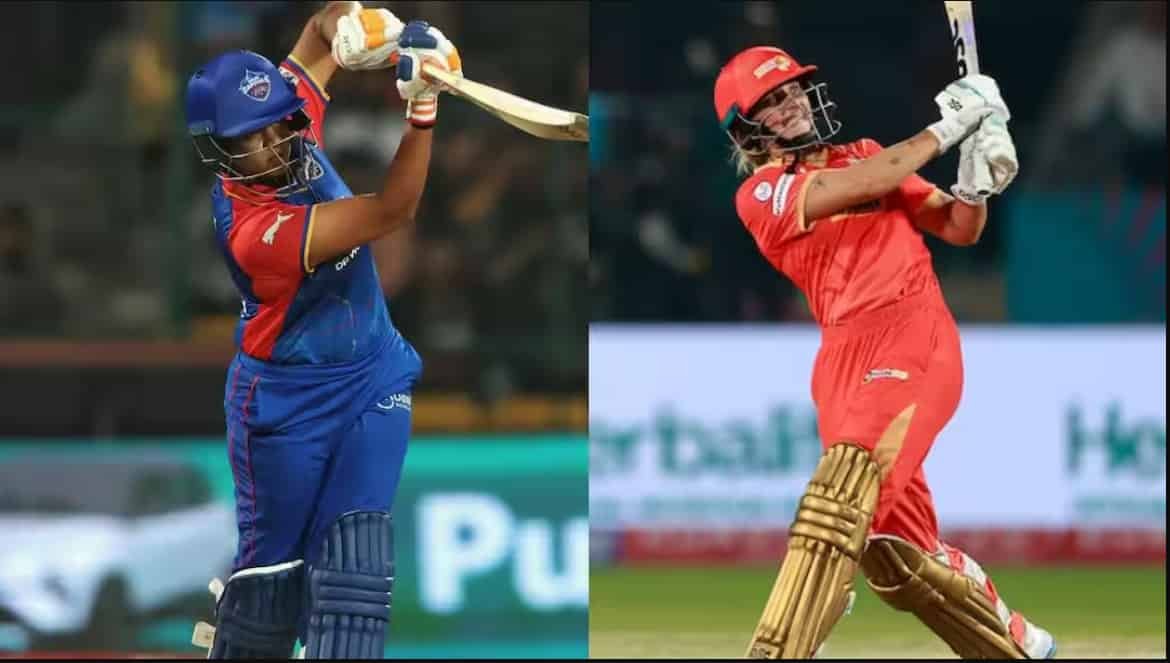
Most Sixes In WPL History
| Player | Team(s) | Span | Matches / Innings | Runs | Strike Rate | Sixes | Highest Score |
|---|---|---|---|---|---|---|---|
| Shafali Verma | DC-W | 2023–2026 | 34 / 34 | 1044 | 155.35 | 53 | 84* |
| Richa Ghosh | RCB-W | 2023–2026 | 33 / 31 | 880 | 151.59 | 41 | 90 |
| Sophie Devine | GG-W / RCB-W | 2023–2026 | 25 / 25 | 614 | 155.05 | 33 | 99 |
| Ashleigh Gardner | GG-W | 2023–2026 | 32 / 32 | 765 | 140.88 | 33 | 79* |
| Harmanpreet Kaur | MI-W | 2023–2026 | 34 / 33 | 1111 | 143.91 | 31 | 95* |
| Grace Harris | RCB-W / UPW-W | 2023–2026 | 29 / 28 | 734 | 145.92 | 26 | 85 |
| Ellyse Perry | RCB-W | 2023–2026 | 25 / 25 | 1097 | 132.96 | 25 | 90* |
| Kiran Navgire | UPW-W | 2023–2026 | 31 / 30 | 435 | 134.67 | 24 | 57 |
| Smriti Mandhana | RCB-W | 2023–2026 | 33 / 33 | 882 | 129.70 | 24 | 96 |
| Hayley Matthews | MI-W | 2023–2026 | 33 / 33 | 861 | 122.47 | 24 | 77* |
Top 10 Players with Most Sixes In WPL History
Shafali Verma — Fearless Opener
- Shafali Verma leads most sixes in wpl history by a margin that reflects not just talent but an entirely distinct approach to T20 batting at the top of the order. Her 53 sixes from 34 matches leave the second-placed player twelve maximums behind — a gap that speaks to sustained, relentless boundary-hitting across every season of the league’s existence.
- Her strike rate of 155.35 means she scores at more than one and a half runs per ball across her entire WPL career. That figure is not built on one explosive innings — it is the product of consistent aggression across 34 matches against the best women’s bowling attacks in the world.
- Shafali opens the batting for Delhi Capitals and initiates her attack from the very first delivery. She does not spend overs assessing the pitch or respecting the reputation of the opposition bowler. She identifies the delivery she wants to hit and commits fully. This fearlessness — treating every ball as an opportunity to score rather than a threat to be managed — creates a psychological burden on the bowling side that begins before the match even starts.
- Her highest score of 84 not out came in a match where Delhi needed runs quickly. She produced exactly that, without breaking the natural flow of her attacking game to accommodate the pressure of the situation. That ability to hit sixes at the same rate under match pressure as in routine league fixtures is what separates the truly elite six-hitters from those who only perform when the match context is favorable.
Richa Ghosh — Finisher Under Pressure
- Richa Ghosh operates in the phase of the innings where T20 cricket is at its most demanding — the final four to six overs, when bowling restrictions are lifted, fielders are placed defensively, and every delivery is bowled with maximum accuracy to prevent exactly the kind of six-hitting she specializes in.
- Her 41 sixes from 31 innings are remarkable because they are almost entirely accumulated in the death overs, against bowlers executing their best plans with full defensive field settings. The fact that she maintains a strike rate of 151.59 under those conditions is a reflection of how technically and mentally equipped she is for the pressure of match-finishing roles.
- Ghosh stays calm when asking rates climb to double figures. Where other batters in similar positions tighten up and start chasing boundaries desperately, she assesses the situation, identifies the weakest delivery in an over, and targets that single ball to clear the boundary. This calculated patience within an aggressive overall approach is the signature of a world-class finisher.
- Her highest score of 90 for RCB was a defining performance in the league’s early seasons. That innings featured six sixes, was constructed against a competitive bowling attack, and completely changed RCB’s trajectory in a match where they had appeared to be falling short of a competitive total. Opposition teams now construct entire bowling strategies around keeping Ghosh off strike in the final overs — the highest compliment a finishing batter can receive.
Sophie Devine — Smart Power
- Sophie Devine’s presence in the most sixes chart from only 25 matches confirms her as one of the most efficient boundary-hitters the WPL has featured. Her 33 sixes at a strike rate of 155.05 — almost identical to Shafali Verma’s — reflect a player whose attacking output is comparable to the league’s most aggressive batters despite operating with more selective shot selection.
- Devine brings New Zealand international experience that spans multiple T20 leagues and formats. She understands pitch conditions, reading surfaces quickly and adjusting her attack zone accordingly. Against a seaming pitch she targets the shorter boundaries. Against spin on a slower surface she comes down the pitch and uses her footwork to create the pace for her sixes. This tactical adaptability sets her apart from hitters who rely purely on strength.
- What makes her particularly dangerous is the contrast between her measured start and her ability to detonate in a single over once she has assessed the conditions. Bowlers who set defensive fields against her early are often exposed when she suddenly shifts from selective accumulation to full attack mode — and by the time they adjust, the momentum has changed irreversibly.
- Her highest score of 99 — featuring eight sixes and coming tantalisingly close to a WPL century — demonstrated the full breadth of her batting capability. That innings combined classical opening batsmanship with power-hitting of the highest order, and it remains one of the most technically complete T20 innings produced in the WPL across all seasons.
Ashleigh Gardner — All-Round Strength
- Ashleigh Gardner’s 33 sixes carry weight that the raw number alone does not convey. She generates those maximums while also bowling four overs in the vast majority of matches she plays — a physical and mental workload that most dedicated batters do not carry. Maintaining a batting strike rate of 140.88 alongside that bowling output reflects elite-level professional conditioning and concentration.
- Gardner bats in the middle order for Gujarat Giants, typically entering between overs eight and twelve when the innings needs to be accelerated toward a competitive total. She assesses the situation quickly — how many wickets are in hand, how many overs remain, what the pitch is offering — and then calibrates her attack accordingly. Her sixes are rarely slog hits; they are placed deliveries that find the boundary because her timing and power combine to carry the ball over the rope rather than through it.
- Her unbeaten 79 in a match Gujarat appeared to be losing became one of the most discussed individual performances in the league’s early seasons. She walked in with her team struggling, assessed the situation without panic, and produced a match-winning innings built on calculated six-hitting that left the opposition unable to find an effective counter-strategy in the time remaining.
Harmanpreet Kaur — Captain’s Authority
- Harmanpreet Kaur’s 31 sixes alongside 1,111 runs place her in a category no other player in this top ten occupies — the combination of highest run volume and substantial six-hitting that defines a complete captain’s batting contribution. Her 143.91 strike rate reflects a player who accelerates when the game demands it rather than attacking from the very first ball regardless of context.
- As Mumbai Indians captain, she reads match situations across both batting and bowling phases simultaneously. When she bats, that broader match awareness translates into intelligent innings construction — she knows when to accumulate, when to rotate strike, and exactly which over to target for her maximum-hitting phase. This strategic intelligence is what allows her to score more runs than anyone else in this top ten while still clearing the boundary 31 times.
- Her highest score of 95 not out — narrowly missing a WPL century — showcased her ability to build and accelerate within the same innings. She paced her way through the powerplay, shifted gears in the middle overs, and finished with a cluster of sixes that brought the total to match-winning level. The fact that she remained unbeaten suggests she had more left to give — a characteristic of the truly dominant batters in franchise T20 cricket.
Grace Harris — Explosive Middle Order
- Grace Harris has represented two franchises in WPL — RCB-W and UP Warriorz — and produced significant six-hitting output for both. Her 26 maximums from 28 innings reflect a player whose impact is not venue-dependent or team-structure-dependent. She delivers across different environments, batting lineups, and match contexts.
- What distinguishes Harris as a six-hitter is her complete 360-degree hitting range. She hits sixes straight, over mid-on, over mid-wicket, through the covers off-side, over square leg, and over fine leg — effectively removing every safe zone from the bowling captain’s planning options. When a batter cannot be contained by any field placement, the only response is to bowl perfectly, and even then Harris has demonstrated the ability to find boundaries off good deliveries.
- Her 734 runs across two franchises confirm that her contribution is not limited to explosive cameos. She scores consistently, meaning teams can rely on her to both build and accelerate an innings depending on what the match situation requires. Her highest score of 85 featured multiple sixes in the most impactful phase of the innings, contributing directly to a team total that proved match-winning.
Ellyse Perry — Controlled Power
- Ellyse Perry’s place in the most sixes chart comes with context that no other player on this list provides — a batting average of 64.80 across 1,097 runs, the highest in this entire top ten by a significant margin. Her 25 sixes represent a different kind of boundary-hitting contribution: one where each maximum is selected, placed, and executed within an overall innings framework designed for maximum run accumulation rather than maximum entertainment.
- Perry bats in the middle order for RCB and her primary role is to build the innings through the middle overs while maintaining a strike rate above 132. Her sixes tend to arrive in clusters — several in a single over when she decides to attack a specific bowler — rather than being distributed evenly across her innings. This concentration of six-hitting means she can shift the momentum of a match decisively in a single over, which is arguably more valuable tactically than spreading boundaries throughout.
- Her unbeaten 90 as a match-finisher demonstrated the full value of her controlled power approach. She stayed until the end, accelerated precisely when needed, and finished the innings with the strike rate her team required. That combination of patience and explosive acceleration within the same innings is a skill set that very few players in women’s T20 cricket possess at Perry’s level.
Kiran Navgire — Raw Strength
- Kiran Navgire represents a different category of six-hitter from everyone else on this list. Where most players in the top ten combine six-hitting with high run totals, advanced averages, or exceptional strike rates across all scoring zones, Navgire’s contribution is built primarily on natural physical power that makes her batting exceptionally simple to understand and exceptionally difficult to bowl at.
- She arrives at the crease, she sees the ball, and she applies maximum force. This approach produces sixes with a regularity that belies the apparent simplicity of the method. Even deliveries that she does not connect with perfectly tend to clear the boundary because the power behind her swing compensates for timing errors that would produce much shorter results from most other batters.
- Her 24 sixes from 30 innings at a strike rate of 134.67 reflect a player who is still developing the full range of her T20 batting skills. Her highest score of 57 suggests she is working on converting her powerfully started innings into more substantial contributions — the technical and tactical development that will come with more seasons of franchise cricket at this level. But as a death-over hitter whose specific role is to maximize run-rate in the final four overs, she has already proven her value at the highest level of women’s T20 cricket.
Smriti Mandhana — Elegant Six-Hitter
- Smriti Mandhana’s inclusion in the most sixes chart comes with an aesthetic qualifier that no other entry on this list carries. Her 24 sixes are produced through timing so precise that the ball travels the same distance as a harder-hit shot from a physically stronger batter — a technical achievement that places her in a unique category within women’s T20 cricket.
- She opens the batting for RCB across each WPL season, and her primary function is to give her team a strong start while maintaining the flexibility to shift gears as the innings develop. Her strike rate of 129.70 is the lowest among the ten players listed, but that figure exists alongside 882 runs across 33 innings — a combination that confirms she is providing consistent value across every match she plays.
- Her highest score of 96 was an innings that demonstrated the full spectrum of her batting capability. She began conservatively, establishing herself at the crease and assessing the conditions, then gradually accelerated through the middle overs before finishing with a phase of batting that included multiple sixes produced through extraordinary timing rather than brute force. The innings came frustratingly close to a WPL century — a milestone that would have been produced in a style entirely distinct from every other century scorer in the league.
Hayley Matthews — Flexible Role Player
- Hayley Matthews’ 24 sixes are unique in this top ten because they arrive across the broadest range of match situations of any player listed. Where other top-ten members are typically deployed in specific roles — opening attacker, middle-order finisher, death-over hitter — Matthews operates as a genuine all-situation player whose six-hitting contributes to anchor innings, partnership-building phases, and explosive finishes with equal regularity.
- Her 861 runs from 33 innings reflect a consistent presence at the top of Mumbai Indians’ batting order across multiple seasons. She opens both batting and bowling for her team, which means she carries a workload comparable to Ashleigh Gardner’s and produces her six-hitting contribution within that broader all-round frame. Her strike rate of 122.47 reflects the anchor role she frequently performs — but it does not capture the match situations where she shifts into full attack mode and produces sixes that change innings trajectories instantly.
- Her unbeaten 77 in a match where MI required controlled accumulation rather than explosive scoring demonstrated her adaptability across different match scenarios. She hit sixes when the match situation demanded them and showed the restraint to accumulate through boundaries and singles when that approach was more valuable to her team. This flexibility is the quality that defines her career in WPL and explains why MI has retained her across multiple seasons.
Key Trends and Observations
- Strike Rate and Six-Hitting Connection The relationship between strike rate and six-hitting frequency in this top ten is not coincidental — it is causal. Players who hit sixes regularly score at higher strike rates because each maximum delivers six runs from a single delivery that would otherwise require multiple balls of accumulation. Nine of the ten players listed maintain strike rates above 129, and the top five all exceed 140.
- Bowlers faced by high-frequency six-hitters cannot maintain standard defensive fields without conceding boundaries in other zones. The field expansions required to cover boundary-hitting create gaps in the infield that produce additional twos, threes, and fours — meaning wpl most fours and sixes are connected statistics that compound each other’s impact rather than existing as independent contributions.
- Team Strategy Patterns Royal Challengers Bangalore feature in this top ten with four players — Richa Ghosh, Sophie Devine, Ellyse Perry, and Smriti Mandhana. This concentration reflects a deliberate franchise philosophy built around batting depth across all positions rather than relying on one or two match-winners to carry the offensive load.
- RCB’s approach means opposition bowling captains cannot target a specific batter to contain and neutralize. Every position in their batting order presents a genuine six-hitting threat, which forces bowling teams to commit to defensive plans across the full twenty overs rather than simply getting through the dangerous phase around positions one and two.
- League Evolution The contrast between wpl most sixes 2023 and most sixes in wpl 2026 illustrates how rapidly the league has developed its power-hitting culture. In the first season, players were still adjusting to franchise cricket’s specific demands — understanding pitches, identifying opposition bowling weaknesses, and calibrating their natural game to the T20 format at this level.
- By 2026, those adjustments have been completed. Players know WPL venues, understand which surfaces reward attacking play and which require more selective shot selection, and have developed franchise-specific game plans against opposition bowlers they have faced multiple times. The result is a measurable increase in six-hitting frequency across the league that shows no sign of reversing.
- Global Influence The presence of Devine, Gardner, Perry, Harris, and Matthews — representing Australia, New Zealand, and the West Indies — among the top ten six-hitters confirms that WPL has successfully attracted the world’s best women’s T20 cricketers across multiple seasons. Their presence has elevated the quality of the league in both directions — the overseas stars have raised the six-hitting standard, and the Indian players alongside them have been pushed to match that standard across every phase of the game.
This global competition for places and performances has accelerated the development of Indian players within the league.
Shafali Verma’s position at the top of the chart, ahead of all overseas players, is partly a product of the competitive environment created by playing alongside and against world-class six-hitters across multiple WPL seasons.
Conclusion:
The full picture of most sixes in wpl history confirms that the league has built its identity around power-hitting in a way that no other women’s franchise competition has matched.
The depth of six-hitting talent across all ten positions in this chart — from Shafali’s 53 at the summit to the four-way tie at 24 completing the group — reflects a league where boundary-clearing capability is a universal expectation rather than a specialist contribution.
- Power-Hitting as the Core of Modern WPL: Every franchise in the league constructs its batting lineup around players who can clear the boundary across multiple phases of the innings. Power-hitting is no longer a death-overs specialty — it is a skill deployed in the powerplay, the middle overs, and the closing stages simultaneously. Teams that cannot generate six-hitting volume across their lineup consistently fall short against those that can.
- Rising Total Sixes in WPL 2026: The total sixes in WPL 2026 have increased across every season since the league’s inaugural edition. Player familiarity with venues, opposition bowlers, and franchise batting systems has created conditions where six-hitting frequency continues to grow season on season. The upward trajectory in boundary-clearing numbers will only accelerate as the league attracts more of the world’s elite women’s T20 cricketers.
- Comparison with Men’s Cricket: When analyzed alongside most sixes in IPL history, WPL’s six-hitting rates confirm that women’s franchise T20 cricket has closed a significant gap on its men’s equivalent in terms of attacking batting volume. The entertainment value generated by WPL’s top ten six-hitters competes directly with the best comparable figures from the men’s game, validating the league’s premium positioning in the global T20 calendar.
- Entertainment Value and Fan Impact: Six-hitting drives stadium attendance, television viewership, and social media engagement in ways that no other cricketing skill can replicate. The WPL 2026 sixes list reflects a league that understands its entertainment product and has successfully built its competitive structure around the batting spectacle that fans everywhere respond to most powerfully.
- Why Six-Hitters Will Define the Future: The WPL’s longest six records continue to be broken as players develop physically, technically, and tactically across successive seasons. The next generation of women’s T20 cricketers is growing up watching Shafali Verma clear boundaries from ball one and Richa Ghosh demolish death-over bowling attacks — and they are being shaped by those examples. The six-hitters who feature in future WPL seasons will be products of this league’s influence, and they will extend the standard that this top ten has established.