
When The Hundred Women’s competition kicked off in 2021, nobody quite knew how the 100-ball format would play out for bowlers.
Would it favor aggressive pace? Would spinners get hammered? Four seasons later, we’ve got our answer — and it’s come in the form of some absolutely brilliant bowling performances that have defined the tournament.
Lauren Bell sits at the top with 60 wickets, a number that reflects not just skill but consistency across multiple seasons.
Behind her, Amanda-Jade Wellington has claimed 52 scalps, while Kate Cross rounds out the top three with an even 50.
What makes this leaderboard fascinating isn’t just the numbers — it’s the mix of bowling styles, the variety of teams represented, and the tactical intelligence required to succeed in such a batting-friendly format.
Most Wickets in The Hundred Women’s
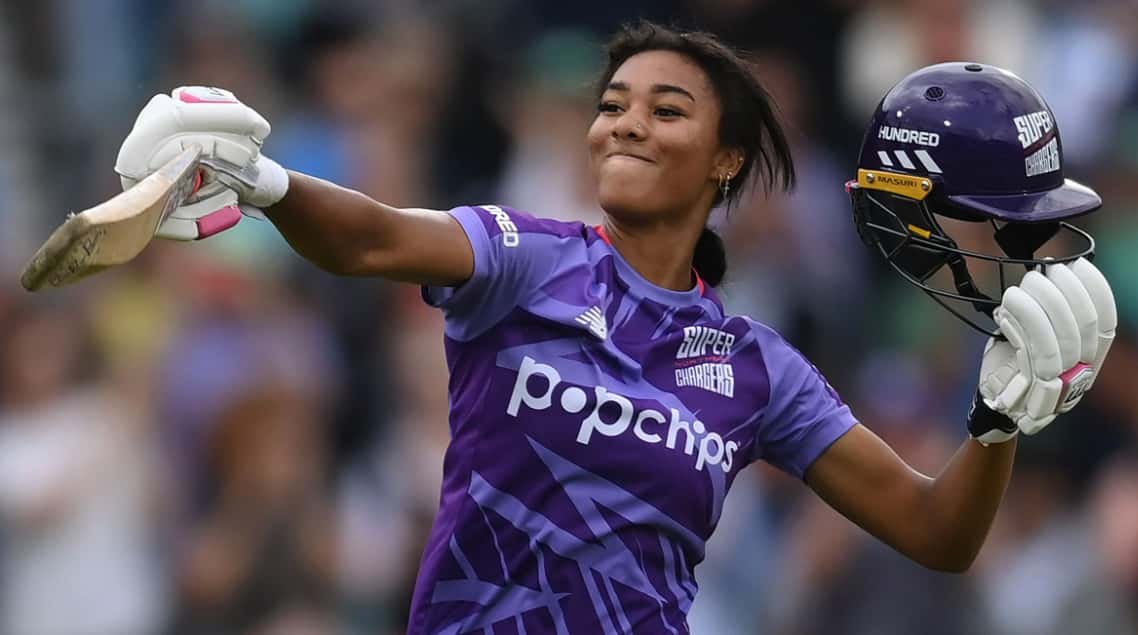
The Top 10 Wicket-Takers in The Hundred Women’s Competition
Here’s how the leading bowlers stack up across all seasons of The Hundred Women’s tournament:
| Player | Matches | Wickets | Best Figures | Average | Economy | Strike Rate |
|---|---|---|---|---|---|---|
| Lauren Bell | 41 | 60 | 4/6 | 14.91 | 6.81 | 13.13 |
| Amanda-Jade Wellington | 40 | 52 | 4/12 | 16.53 | 7.06 | 14.03 |
| Kate Cross | 40 | 50 | 4/20 | 18.36 | 7.22 | 15.24 |
| Marizanne Kapp | 33 | 46 | 4/9 | 13.47 | 6.16 | 13.10 |
| Em Arlott | 36 | 45 | 3/15 | 15.97 | 7.48 | 12.80 |
| Linsey Smith | 37 | 42 | 3/12 | 19.64 | 6.96 | 16.92 |
| Katie Gordon | 38 | 41 | 4/15 | 20.70 | 7.54 | 16.46 |
| Katie Levick | 36 | 39 | 3/24 | 18.51 | 6.94 | 16.00 |
| Sarah Glenn | 40 | 39 | 4/22 | 21.94 | 7.18 | 18.33 |
| Hayley Matthews | 33 | 39 | 4/14 | 16.94 | 7.67 | 13.25 |
Lauren Bell: The Tournament’s Leading Wicket-Taker
- Lauren Bell’s 60 wickets in just 41 matches tells you everything about her impact in The Hundred Women’s competition. Her average of 14.91 is the kind of number that makes batting coaches nervous, and her economy of 6.81 means she’s not just taking wickets — she’s controlling the game.
- Bell’s right-arm pace isn’t about raw speed. It’s about angles, consistency, and hitting those awkward lengths that force batters into mistakes. Southern Brave have built their bowling attack around her, and she’s delivered season after season. Her best figures of 4/6 came in a match where she essentially shut down the opposition single-handedly, and it’s those performances that separate good bowlers from match-winners.
- What’s particularly impressive is her strike rate of 13.13 — meaning she picks up a wicket roughly every 13 balls. In a format where you’ve only got 100 balls to work with, that frequency is gold.
Amanda-Jade Wellington: Consistency Across Teams
- Wellington’s 52 wickets across 40 matches make her the second-highest wicket-taker in the competition’s history, and she’s done it while representing different franchises. That tells you the skill isn’t team-dependent — it travels with her.
- As a leg-spinner, Wellington brings variety to any attack. Her best figures of 4/12 showcase what happens when she gets into rhythm — batters simply can’t read her variations. She’s not the quickest through the air, but she’s smart with her flight and uses the crease well to create different angles.
- Her economy of 7.06 is decent for a spinner in this format, where batters are usually looking to attack slow bowling. The fact that she maintains a strike rate under 15 while being targeted shows real mental strength.
Kate Cross: Experience and Movement
- Kate Cross reached the 50-wicket mark in 40 matches, cementing herself as one of the most dependable seamers in The Hundred Women’s tournament. She’s not going to blast you out with pace — her strength is swing, seam movement, and reading conditions.
- Cross has played for two different teams in the competition, which proves her adaptability. Her economy of 7.22 and average of 18.36 might not leap off the page, but they reflect someone who bowls in all phases of the innings, including when batters are going hard.
- Her 4/20 best figures came in a match where she used the new ball beautifully, getting it to talk in overcast conditions. That’s Cross in a nutshell — give her something in the pitch, and she’ll exploit it ruthlessly.
Marizanne Kapp: Quality Over Quantity
- Kapp’s 46 wickets in just 33 matches give her the best wickets-per-match ratio among the top bowlers. She hasn’t played every season or every match, but when she’s available, she dominates.
- Her average of 13.47 is the lowest on this entire list, which tells you how hard it is to score off her. Kapp bowls fast-medium pace with the ability to swing it both ways, and her seam position is so good that even on flat pitches, she finds movement.
- Best figures of 4/9 — that’s a demolition job. Those are numbers that win you player-of-the-match awards and change the course of tournaments. Kapp brings an international pedigree to The Hundred, and it shows in moments like that.
Em Arlott: Birmingham’s Breakthrough Weapon
- Freya “Em” Arlott has taken 45 wickets in 36 matches for Birmingham Phoenix, establishing herself as a genuine wicket-taking threat in English domestic cricket. Her right-arm medium-pace might not generate headlines, but her average of 15.97 and strike rate of 12.80 absolutely should.
- Arlott hits the deck hard and generates bounce that troubles batters, especially on surfaces that offer a bit of help. Her best of 3/15 came in a pressure game where Phoenix needed someone to step up, and she delivered with aggressive, attacking lines.
- Her economy of 7.48 is on the higher side, but that’s because she operates in wicket-taking mode rather than containing mode. For a developing bowler who’s grown into the format, 45 wickets is an excellent return.
Spinners Who’ve Made Their Mark
Linsey Smith’s Left-Arm Control
Smith’s 42 wickets for Northern Superchargers as a left-arm orthodox spinner deserve more recognition than they get.
Her economy of 6.96 is the second-best among spinners in the top 10, which shows how tight she bowls.
Best figures of 3/12 reflect her ability to strangle batters while still taking wickets.
In a format where spinners often get targeted, Smith has found a way to be both economical and threatening.
Katie Levick’s Wrist-Spin Challenge
Levick is the only leg-spinner in this top 10, and her 39 wickets across three different teams highlight how difficult it is to bowl wrist-spin in The Hundred.
Batters are aggressive against spin, yet she maintains an economy of 6.94 — impressive control for someone who’s looking to turn the ball.
Her best of 3/24 might not seem spectacular, but in a 100-ball game, three wickets is often the difference between winning and losing.
Levick’s variations and tactical nous have made her a valuable asset.
Sarah Glenn’s Reliability
Glenn’s 39 wickets in 40 matches for two franchises show consistent availability and performance.
Her average of 21.94 is the highest on this list, but her strike rate of 18.33 still means she’s contributing wickets at crucial times.
Best figures of 4/22 prove she can produce match-winning spells when the situation demands it.
Glenn has been a trusted option across different conditions throughout the competition.
Hayley Matthews’ All-Round Threat
Matthews has taken 39 wickets in just 33 matches — the fewest appearances in this top 10.
That wicket-taking rate immediately stands out. As an off-spinner who gives the ball plenty of flight, she draws batters into mistakes.
Her best of 4/14 is excellent, and her average of 16.94 ranks among the better ones here.
More importantly, her strike rate of 13.25 is third-best on this list, showing she picks up wickets very regularly when she plays.
Pace Bowlers Making an Impact
Katie Gordon’s Aggressive Approach
Gordon’s 41 wickets across 38 matches for two franchises showcase her value as an attacking pacer.
Her best figures of 4/15 demonstrate what she can do when everything clicks — aggressive lines, good yorkers, and the ability to take wickets in clusters.
Her economy of 7.54 is the highest on this list, which reflects her attacking mindset. She bowls in phases where runs will come, but so will crucial breakthroughs.
Expert Insight: What Makes These Bowlers Stand Out
The common thread among the top 10 most wickets in the hundred women’s competition isn’t pace or spin — it’s adaptability.
These bowlers have learned to operate in a format where batters are constantly on the attack, where fields are spread from the start, and where defensive bowling often gets punished.
Look at the economic rates. Even the most economical bowlers are going at 6-plus runs per set of five balls.
That’s the nature of The Hundred.
What separates the successful bowlers is their ability to take wickets while being attacked, to handle pressure when batters are looking to dominate, and to execute their skills across different surfaces and match situations.
The best bowlers in this format understand that you can’t just contain — you need to threaten.
That’s why strike rates matter more here than in traditional formats.
A bowler who takes two wickets for 30 runs off 20 balls is more valuable than someone who goes for 20 runs without a wicket in the same span.
How The 2024 and 2025 Seasons Shaped the Rankings
The hundred women 2024 most wickets saw several bowlers consolidate their positions.
Bell extended her lead, Cross reached the 50-wicket milestone, and newer bowlers like Arlott continued their upward trajectory.
Looking ahead to the hundred 2025 highest wicket taker, the race remains wide open.
Bell has the lead, but Wellington is within striking distance. One strong season from Kapp — if she’s available for the full tournament — could shake things up entirely.
The hundred women 2025 most runs will also influence these bowling figures, as successful batting performances often come at the expense of bowling averages and economy rates.
Year-by-Year Breakdown
Most Wickets in The Hundred Women’s 2021
The inaugural season set the tone, with several bowlers establishing themselves as key threats. Early conditions favored swing bowlers, and those who adapted quickly built the foundation for their career numbers.
Most Wickets in The Hundred Women’s 2022
The 2022 edition saw spinners becoming more influential as teams figured out the format. Bowlers who could vary their pace and flight became harder to attack, leading to better wicket-taking returns.
Top 10 Most Wickets in The Hundred Women’s All Time
The all-time list reflects consistency over four seasons. It’s not about one brilliant year — it’s about turning up, performing under pressure, and contributing across different conditions and team compositions.
Frequently Asked Questions
- Who has the most wickets in The Hundred Women’s competition?
Lauren Bell leads with 60 wickets in 41 matches, ahead of Amanda-Jade Wellington’s 52 and Kate Cross’s 50.
- Which bowler has the best average among the top wicket-takers?
Marizanne Kapp holds the best average at 13.47, despite having fewer matches than some others in the top 10.
- Are there more pace bowlers or spinners in the top 10?
The list is fairly balanced, with a mix of pace bowlers like Bell, Cross, and Kapp, and spinners like Wellington, Smith, and Matthews.
- Who took the most wickets in The Hundred Women’s 2024?
While exact single-season breakdowns vary, established names like Bell and Wellington continued their dominance in the 2024 edition.
- What’s the best bowling figure in The Hundred Women’s history?
Among the top 10 wicket-takers, Lauren Bell’s 4/6 stands out as the most economical four-wicket haul.
Final Thoughts on The Hundred Women’s Leading Wicket-Takers
Lauren Bell’s position at the top of the wicket-taking charts isn’t just about raw numbers — it represents sustained excellence in a format that doesn’t forgive mediocrity.
The gap between her 60 wickets and Wellington’s 52 might seem comfortable, but in a competition where one good season can yield 15-plus scalps, nothing’s guaranteed.
What’s particularly exciting is watching how different bowling styles succeed.
From Kapp’s swing to Wellington’s leg-spin, from Smith’s left-arm control to Bell’s relentless accuracy, the most wickets in the hundred women’s leaderboard showcases that there’s no single path to success.
The 2025 season will be crucial. Can Bell extend her lead? Will Kapp play enough matches to mount a serious challenge?
And which emerging bowler might crash into this top 10 and change the conversation entirely?
That’s what makes following these records worthwhile — they’re alive, shifting, and always one brilliant spell away from being rewritten.