Women’s Test cricket doesn’t get covered as thoroughly as it deserves – and that includes basic questions about how the game is structured.
If you’ve been watching a Women’s Test and wondered exactly when the tea break happens, how long it runs, or whether the rules differ from the men’s format, this article covers all of it.
Tea Break Time in Women’s Test Cricket
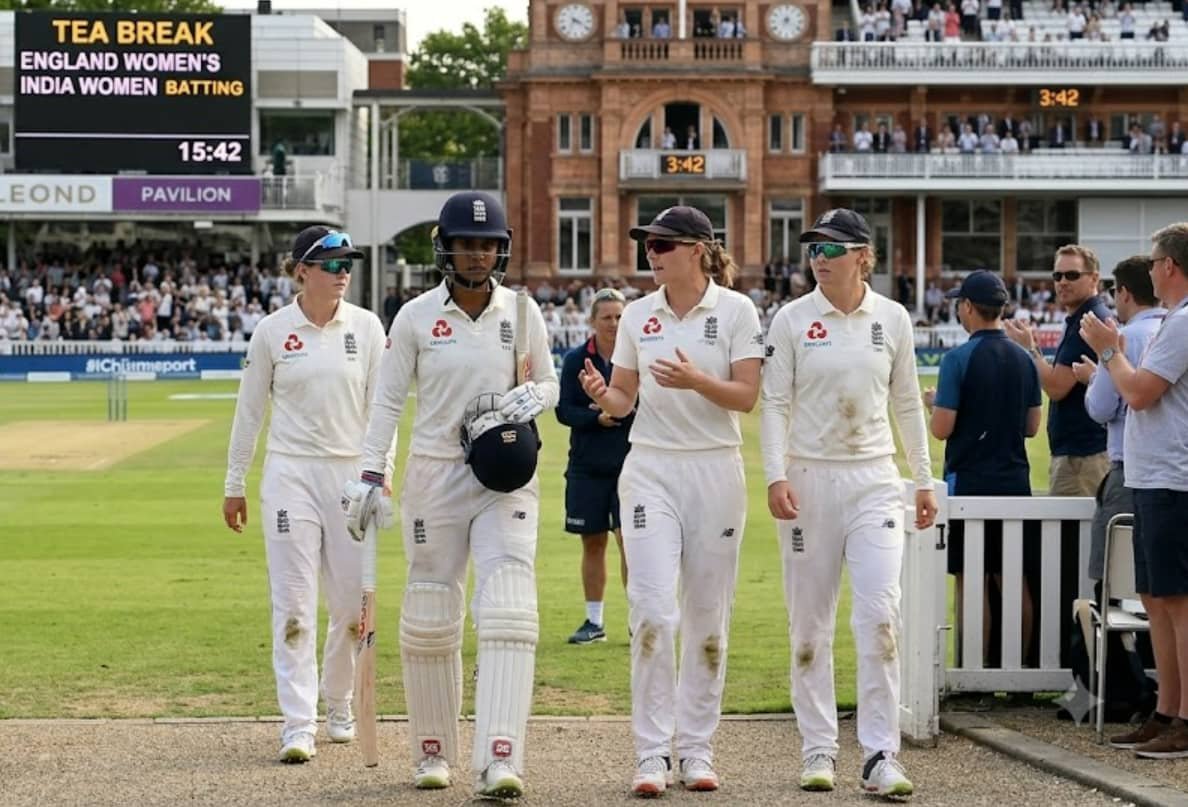
Tea Break Time in Women’s Test Cricket: The Core Answer
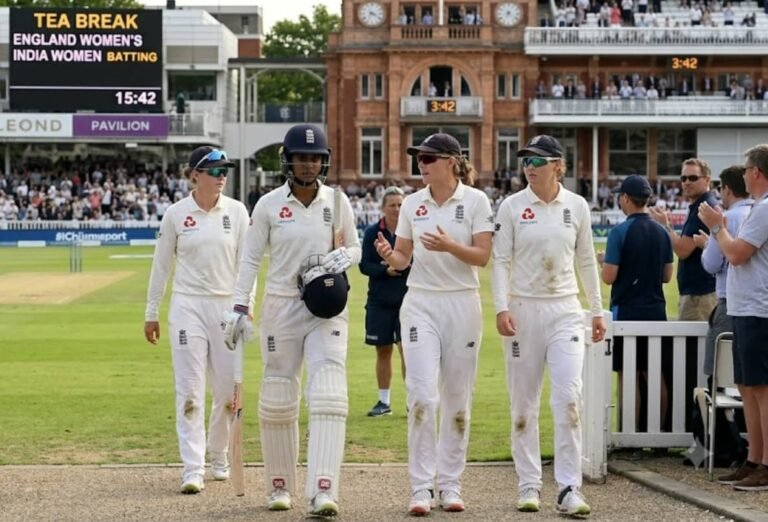
The tea break in Women’s Test cricket lasts 20 minutes — the same duration as in the men’s game.
It falls after the second session of each playing day, serving as the shorter of the two daily intervals.
The lunch break, which separates the first and second sessions, is 40 minutes.
The Laws of Cricket, maintained by the MCC, apply to both the men’s and women’s formats.
The interval structure — including tea break duration — is not differentiated by gender in the Laws themselves.
What differs is how Women’s Tests are scheduled and structured overall.
How a Women’s Test Match Day Is Structured?
Women’s Tests are currently played over four days, not five.
This is the most significant structural difference from the men’s game, and it directly affects how each day of play is managed.
A standard day in a Women’s Test follows the same three-session format:
| Session | Approx. Duration | Break |
|---|---|---|
| First session | ~2 hours | Lunch – 40 mins |
| Second session | ~2 hours | Tea – 20 mins |
| Third session | ~2 hours | Stumps |
Each day targets a minimum of 90 overs, though in practice, the over rate and interruptions determine how much play actually happens.
With only four days available rather than five, every session carries more weight, which makes the tea break a sharper tactical window than it might appear.
The Rules Around When Tea Can Be Moved
The 20-minute duration is fixed once the break starts, but the timing of when tea is taken has flexibility built in.
Under the Laws of Cricket:
- Wicket near tea time. If a wicket falls within 30 minutes of the scheduled tea break, umpires can choose to take tea immediately rather than sending a new batter out for just a few balls before the interval.
- Weather interruptions. If rain or bad light has already reduced the day’s play significantly, the tea break can be rescheduled or consolidated with playing time to recover overs. In Women’s Tests, where four days is the total allocation, teams and officials are especially conscious of protecting playing time.
- Umpire discretion. Umpires can delay the break slightly to allow an over to finish cleanly, avoiding a mid-over stoppage.
None of this changes the 20-minute break itself — only where in the day it lands.
Why the Four-Day Format Matters for Tea Break Context?
Women’s Tests were historically rare. For much of the 20th century, they were played sporadically, and the format itself went through long periods of near-absence at the international level.
The revival of Women’s Test cricket – particularly from the 2010s onwards, with series between England, Australia, India, and South Africa – brought renewed attention to how the format is structured.
The ICC and national boards settled on four-day matches as the standard for Women’s Tests, partly to make them more feasible within bilateral series schedules.
In a four-day game, the pressure on each session is higher. The tea break, brief as it is, becomes a meaningful point for teams to recalibrate.
A bowling side two wickets away from a breakthrough, or a batting team chasing a declaration target, will use those 20 minutes deliberately.
India Women, for instance, played a historic Test against England in 2021 at Bristol – their first Test in over 6 years.
Matches like that, played over four days with full session structures, follow the same interval rules outlined here.
Tea Break Rules: Women’s vs. Men’s Test Cricket
The Laws are the same. The format differences are worth knowing.
| Feature | Men’s Test | Women’s Test |
|---|---|---|
| Match duration | 5 days | 4 days |
| Daily sessions | 3 | 3 |
| Lunch break | 40 minutes | 40 minutes |
| Tea break | 20 minutes | 20 minutes |
| Overs per day (target) | 90 | 90 |
| Tea timing flexibility | Yes | Yes |
The tea break duration is identical. What changes is the context around it – four days instead of five means the tea interval often falls during more pressurised moments in the match.
Does Tea Break Exist in Women’s T20Is and ODIs?
No – just as in the men’s game, tea breaks are exclusive to the Test format.
Women’s T20Is and ODIs follow the same interval structure as their men’s equivalents: a drinks break on the field mid-innings and an innings break between the two sides’ batting. Neither format has a scheduled 20-minute tea interval.
This is purely a product of match length. Test cricket, whether men’s or women’s, is the only format with sessions long enough to warrant a second daily break.
What Happens During the Tea Break in a Women’s Test?
The practical use of the break is similar across both formats.
Players rehydrate, receive physio attention if needed, and discuss the session just played.
For the fielding team, the tea break is a chance for the captain and coaching staff to review bowling plans for the final session.
For the batting side, it’s a moment to assess their position — whether that’s protecting a lead, accelerating, or digging in against a tight bowling attack.
Women’s Test squads are smaller in terms of support infrastructure compared to the largest men’s setups, but the tactical use of the tea interval is no different.
The 20 minutes is the same window regardless of format or gender.
Frequently Asked Questions
- How long is the tea break in Women’s Test cricket?
The tea break lasts 20 minutes. This is the same as in Men’s Test cricket and is defined by the Laws of Cricket, which apply to both formats.
- How many days does a Women’s Test match last?
Women’s Tests are played over four days, compared to five days for Men’s Tests.
- Is the session structure in Women’s Tests the same as in men’s Tests?
Yes. Both formats use three sessions per day, with a 40-minute lunch break and a 20-minute tea break.
- Can the tea break be delayed in a Women’s Test?
Yes. If play has been interrupted by weather or a wicket falls close to the scheduled break time, umpires have discretion to reschedule the tea interval slightly.
- Why don’t Women’s ODIs and T20Is have a tea break?
Shorter formats don’t have the session structure that requires a mid-afternoon break. Tea breaks apply only to Test cricket, whether men’s or women’s.
- How often are Women’s Test matches played?
Women’s Tests are less frequent than men’s Tests but have been growing in regularity since the late 2010s, with series involving England, Australia, India, South Africa, and others scheduled more consistently.
Conclusion:
Tea break time in Women’s Test Cricket is 20 minutes – the same as in the men’s game.
It falls after the second session of each four-day playing day, with flexibility built in for weather delays and match situations.
The four-day structure of Women’s Tests doesn’t change the interval rules, but it does raise the stakes of every session.
That 20-minute break before the final push of the day carries real weight in a format where time is tighter and every over counts.
Also Check:
- Test Match Draw Rules Explained for Women’s Cricket
- What Is the Strike Rate in Cricket
- How Many Creases Are There in Cricket
- Smallest Cricket Ground in the World By Boundary
About the Author