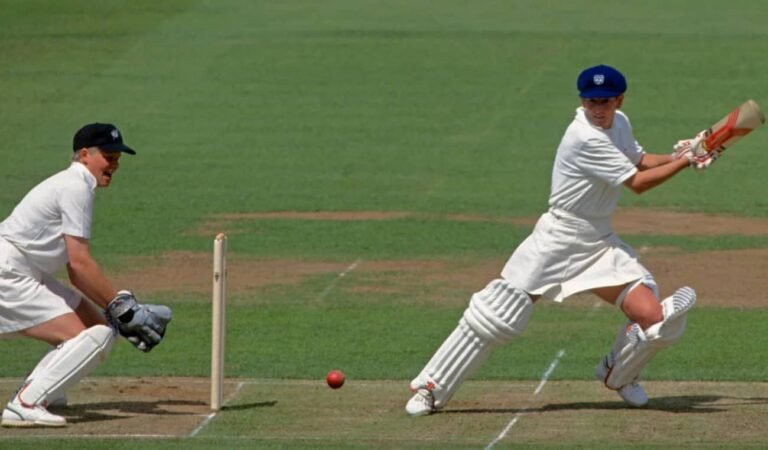
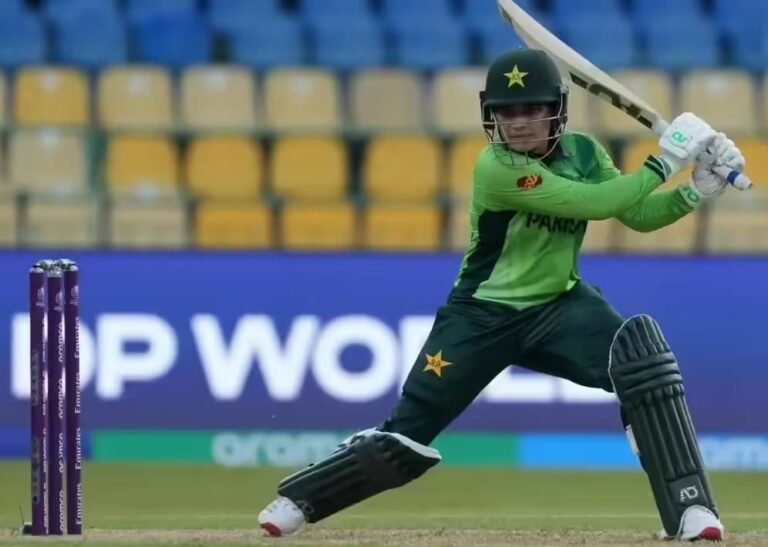
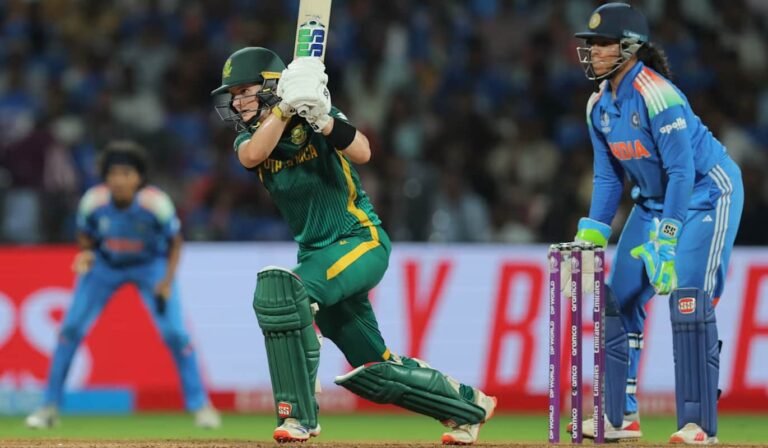
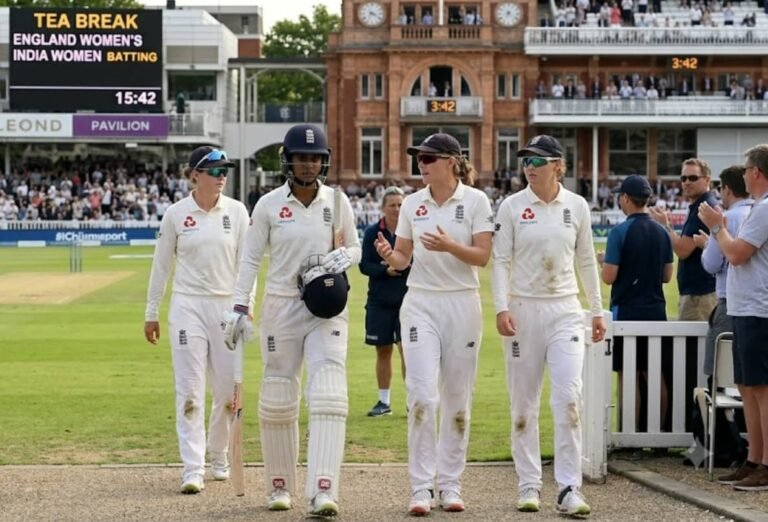
Scoring quickly while staying at the crease.
That’s the paradox every T20I batter faces.
You need boundaries, you need strike rotation, but one mistimed shot and you’re walking back.
It’s why averages above 35 are rare in this format, and anything above 40 is exceptional.
Women’s T20I cricket has seen seven players crack the code.
They’ve combined aggressive intent with remarkable survival skills.
The leader sits above 50, a figure that seems almost impossible in twenty-over cricket. Let’s look at who they are and what makes them stand out.
Highest Batting Average in Women’s T20I Cricket History
The Complete List of Highest Batting Averages in Women’s T20Is
| Player | Country | Matches | Runs | Average | Strike Rate | Fifties |
|---|---|---|---|---|---|---|
| Lucy Barnett | Isle of Man | 34 | 1,222 | 50.91 | 139.49 | 12 |
| Beth Mooney | Australia | 112 | 3,381 | 42.26 | 125.73 | 27 |
| Tahlia McGrath | Australia | 56 | 1,138 | 42.14 | 132.94 | 7 |
| Christina Gough | Germany | 53 | 1,364 | 38.97 | 94.32 | 7 |
| Sterre Kalis | Netherlands | 58 | 1,882 | 38.40 | 105.02 | 11 |
| Mithali Raj | India | 89 | 2,364 | 37.52 | 96.33 | 17 |
| Andrea-Mae Zepeda | Austria | 47 | 1,312 | 37.48 | 93.84 | 6 |
Lucy Barnett: The Unlikely Record Holder
- When you think of women’s cricket powerhouses, the Isle of Man doesn’t come to mind. But Lucy Barnett has been putting them on the map since 2022.
- Her numbers are staggering. An average of 50.91 combined with a strike rate of 139.49 means she’s scoring almost one and a half runs per ball while barely getting out. In 33 innings, she’s hit twelve half-centuries and hasn’t been dismissed for a duck once.
- That highest score of 96 must sting a bit—so close to becoming one of the few women to score a T20I century. But her consistency makes up for it. When you’re averaging over 50 in T20Is, you’re doing something most international batters can’t manage.
Beth Mooney: Australia’s Run Machine
If Barnett’s record feels like it might come with an asterisk due to the level of opposition, Beth Mooney’s doesn’t. She’s done it against the best teams in the world across 112 matches.
Key achievements:
- 3,381 runs (among the highest in women’s T20I history)
- 27 half-centuries showing remarkable consistency
- Two T20I centuries (most batters never get one)
- Average of 42.26 with a strike rate above 125
Mooney has been Australia’s anchor since 2016. She can build an innings, she can accelerate when needed, and she’s been not out 26 times in 106 innings. That tells you she knows how to finish games.
There’s a reason she’s considered one of the best openers in women’s cricket across all formats. This average in T20Is proves it isn’t just about her ODI game.
Tahlia McGrath: The All-Round Weapon
- McGrath brings something different to this list. She’s an all-rounder who bowls medium pace and still maintains an average above 42.
- Since her debut in 2021, she’s played 56 matches with an average of 42.14 and a strike rate of 132.94. Being not out 15 times in just 42 innings means she’s regularly there at the death, pushing Australia over the line.
- Seven half-centuries in four years shows immediate impact. Her highest score of 91 not out came when Australia needed someone to bat through. She did exactly that.
- The value of an all-rounder who averages over 40 with the bat can’t be overstated. It gives teams incredible flexibility with both batting order and bowling combinations.
The Associate Nation Stars
- Three players on this list represent nations outside the traditional cricket establishment. Christina Gough (Germany), Sterre Kalis (Netherlands), and Andrea-Mae Zepeda (Austria) have put up numbers that would be impressive for anyone.
- Gough’s century for Germany—101 not out—is the kind of innings that defines a career. An average of 38.97 over 53 matches proves it wasn’t a one-off.
- Kalis went even bigger with 126 not out, one of the highest individual scores in women’s T20I history. Her 1,882 runs make her one of the leading run-scorers from Associate nations. When the Netherlands face teams like England or Australia in qualifiers, she’s the one they build around.
- Zepeda’s numbers tell an interesting story. 157 fours and zero sixes. She’s all timing and placement, finding gaps rather than clearing boundaries. It works—37.48 average and a T20I century prove that power isn’t everything.
Mithali Raj: The Pioneer’s T20I Record
- Mithali Raj’s T20I career gets less attention than her ODI legacy, but look at the numbers. An average of 37.52 across 89 matches from 2006 to 2019 covering the entire evolution of women’s T20I cricket.
- Her strike rate of 96.33 looks modest now, but context matters. When she started playing T20Is, the format was new. Strike rates were lower, boundaries were harder to come by, and India’s approach was more cautious.
- Seventeen half-centuries without a single T20I ton shows her style. She’d get to forty, then fifty, then push toward seventy or eighty, but rarely went on. That highest score of 97 not out must have been frustrating—so close to history.
- Still, 2,364 runs over thirteen years meant she was India’s most reliable T20I batter for more than a decade.
Understanding Average vs. Strike Rate in Women’s T20Is
- Here’s what separates good T20I batters from great ones: balancing survival with scoring speed.
- Look at the list again. Every player except Raj has a strike rate above 90. Barnett, Mooney, and McGrath are all above 125. That’s rapid scoring combined with staying power.
- Compare that to players who might score quickly but get out often. A batter averaging 25 with a strike rate of 140 creates excitement but doesn’t win matches consistently. These seven players win matches because they stay in.
Expert Insight: What Makes These Averages Sustainable
Most T20I careers follow a pattern. Early success, then opponents figure you out, then your average drops as you age. Maintaining a high average requires constant adaptation.
- Technical adjustments matter. Bowlers target your weaknesses. Field placements shift. You need counters. Mooney has adjusted her game against spin over the years. McGrath has added power shots to her placement game.
- Match awareness is crucial. Knowing when to attack, when to rotate strike, when to rebuild. Barnett’s twelve fifties in 33 innings suggest she reads situations well. You don’t maintain 50.91 by slogging every ball.
- Not-out innings inflate averages mathematically but also show something real—the ability to bat through pressure when your team needs you most. McGrath’s 15 not-outs in 42 innings? That’s finishing games.
How This Compares Across Formats
- When you look at the highest batting average in ODI women’s cricket, the numbers climb higher. Averages in the 50s and 60s appear more frequently.
- That makes sense—fifty overs gives you more time to build an innings, take fewer risks early, and capitalize later.
- The average score in women’s ODI cricket sits around 220-240 per innings depending on conditions. In T20Is, it’s closer to 130-150.
- The margin for error shrinks dramatically.
- Most 50+ scores in women’s cricket still come from ODIs, not T20Is. The format doesn’t reward occupation as much.
- You need boundaries, which means risk. These seven players have found the balance.
- For context, most T20I matches played by a player in women’s cricket goes well above 100 for several players, but maintaining average above 35 across that many matches is rare. Mooney’s 112 matches at 42.26 shows what elite consistency looks like.
Frequently Asked Questions
- What’s considered a good batting average in women’s T20I cricket?
Anything above 25 is solid. Above 30 is very good. Above 35 puts you in elite company. Above 40 is exceptional and rare.
- Who has the most fifties in women’s T20I cricket?
Beth Mooney leads with 27 half-centuries, followed by Mithali Raj with 17. These totals reflect both longevity and consistency at the highest level.
- How does Lucy Barnett’s average compare historically?
Her 50.91 average is the highest in women’s T20I history. No other player has sustained an average above 50 across a significant number of matches.
- Why do some players have lower strike rates but high averages?
Players like Mithali Raj played in different eras when scoring was generally slower. Others, like Gough and Zepeda, play for teams where building innings matters more than explosive starts.
- What role do not-out innings play in these averages?
They increase the average mathematically since you’re not dividing by that dismissal. But they also indicate a player’s ability to finish innings under pressure, which is valuable.
The Future of High Averages in Women’s T20Is
As the women’s game continues growing, these records will face pressure.
More matches against stronger opposition mean tougher conditions. Better bowling attacks mean fewer easy runs.
But that’s what makes these seven players special.
They’ve already proven they can adapt, score quickly, and survive. Barnett’s combination of average and strike rate sets a new benchmark.
Mooney’s longevity shows it’s possible across many years.
The next generation will study these players.
They’ll watch how McGrath rotates strike, how Kalis builds innings, how Mooney adjusts her game. And maybe, just maybe, someone will crack 45 average with a 140 strike rate and rewrite what we think is possible.
For now, these seven sit at the top.
They’ve mastered the hardest balance in cricket—staying in while scoring fast. That’s the highest batting average in women’s T20I cricket history, and it represents excellence in its purest form.
Also Check:
About the Author