AI in women’s cricket is changing how fans follow a match, especially fans who cannot watch every ball.
A full scorecard holds a lot: runs, wickets, partnerships, overs and extras. For a new fan, or a busy one checking in between meetings, that grid can feel like homework.
Smart match summaries fix that. Fed with accurate women’s cricket data, an AI tool can say what changed in the last five overs, why a target moved, or who turned a WPL chase. Fed with poor data, the same tool simply guesses.
This guide explains how scorecards become summaries, which data fields matter most, how rain and abandoned games trip tools up, and where women’s cricket still has data gaps.
AI in Women’s Cricket

The Women’s Cricket Scorecard Is Still the Foundation
Before any AI, there was the scorecard. It packs batting, bowling, dismissals, extras, fall of wickets and totals into one compact table, and it has told cricket stories for generations.
An experienced reader sees a lot at a glance: a slow opening stand, a middle-order rescue, a late slide.
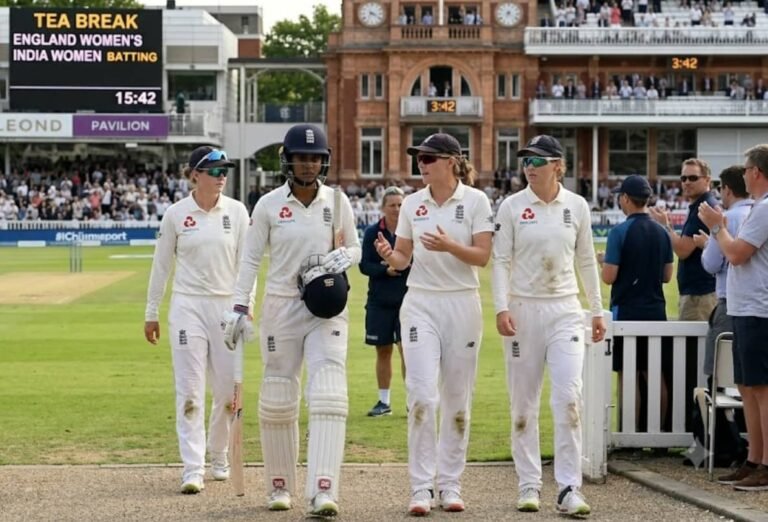
In a Test, a single session can turn the match, and our explainer on tea break time in women’s Test cricket shows how the day is organised around those intervals.
AI does not replace this table. It reads the women’s cricket scorecard and turns it into words. If the scorecard is wrong or incomplete, the summary will be wrong too.
What Makes a Women’s Cricket Match Summary “Smart”?
A basic summary gives the result: who won and by how much. A smart one explains how the result happened.
Compare “Team A won by 20 runs” with this: “Team A lost two early wickets, rebuilt through a 54-run stand, then defended the total with tight bowling in the last four overs.”
The second version tells a reader why the match went the way it did.
To write that, the AI needs structured inputs:
| Data field | What it lets the summary say |
|---|---|
| Result and margin | Who won, and how close it was |
| Innings scorecards | Who scored the runs and who took the wickets |
| Fall of wickets | Where the collapse or turning point came |
| Partnerships | Which stand built or broke the innings |
| Overs and run rates | Whether the pace was rising or falling |
| Format, venue and tournament | The context: a Test, a T20I or a WPL league game |
| Match status and result type | Whether the game is live, delayed, revised or abandoned |
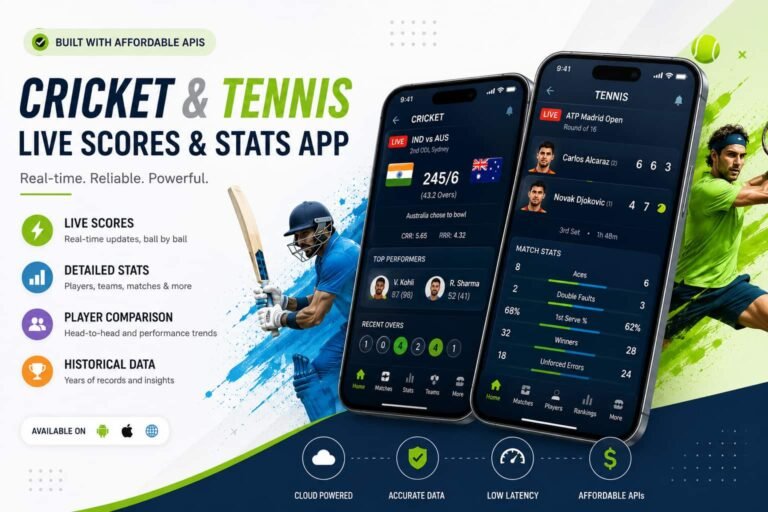
The AI layer writes the words. The data layer supplies the facts. That is why serious apps connect their tools to a reliable cricket API that returns structured scorecards, player IDs and match status, and why it is worth checking that the feed covers women’s fixtures and not only men’s.
How AI Explains Momentum in WPL and T20I Matches?
Cricket swings. A side can look comfortable until two wickets fall in one over, and a steep chase can open up when one batter finds a weak matchup.
AI can read recent overs, wickets and scoring rate to explain those swings. Take a hypothetical WPL chase of 160.
At the halfway point the score is 78/2 and nothing looks wrong. Then three wickets fall for 12 runs.
A good summary would say the chasing side lost control in that spell: at 90/5 after 13 overs, it needs 70 from 42 balls, roughly ten an over.
The WPL is the BCCI’s five-team franchise league, and the official WPL site is the reference point for fixtures, tables and results.
Checking an AI summary against it is a simple way to catch mistakes.
Why Ball-by-Ball Data Makes Summaries Specific
Ball-by-ball data is the most valuable input an AI tool can get. It shows the rhythm of an over: dots, singles, boundaries, wickets, wides and no-balls.
With only final scores, AI can describe the outline of a game. With ball-by-ball data, it can explain how a bowler squeezed a batter or why the last over decided the match.
An over of five dots and a six, and an over of six singles, both cost six runs. Only one of them builds pressure, and only ball-by-ball data can show the difference.
Open data projects such as Cricsheet publish ball-by-ball files for women’s competitions including the Women’s Premier League, the Women’s Big Bash League and the Rachael Heyhoe Flint Trophy.
That gives developers and writers a place to see what clean women’s cricket data looks like.
Match Status: Rain, DLS and Abandoned Games
The riskiest gap in an AI summary is a missing match status. A game can be live, delayed, at an innings break, interrupted by rain, on a revised target, abandoned, complete or a no result. Each state needs different wording.
Without the status, a tool might write a final recap while play is still delayed, ignore a revised target, or describe an abandoned game as if it finished normally.
In rain-affected limited-overs matches, revised targets come from the Duckworth-Lewis-Stern method, and the ICC publishes its methodology and FAQs.
So feed the AI more than the score. Give it the match status, the innings state and the official result type.
Teams building these features should read the <a href=”https://example.com/REPLACE-WITH-CLIENT-URL” rel=”sponsored”>API documentation</a> first to see which of those fields the feed exposes before automating anything.
Why AI in Women’s Cricket Helps New Fans?
Terms such as required run rate, powerplay, net run rate and follow-on can put newcomers off. AI can explain them in context, while the match is still being played.
Say a team needs 45 from 30 balls with five wickets in hand. A regular viewer knows that is gettable. A newcomer may not. A plain-language note can say the chase is still alive, but one wicket and a quiet over could change that.
This matters most when fans meet unfamiliar teams. At regional events such as the ACC Women’s T20I Premier Cup 2026, a viewer who follows the big sides may not know the rest. A short summary gives them a way in without replacing the full scorecard for serious followers.
Player Insights That Add Context
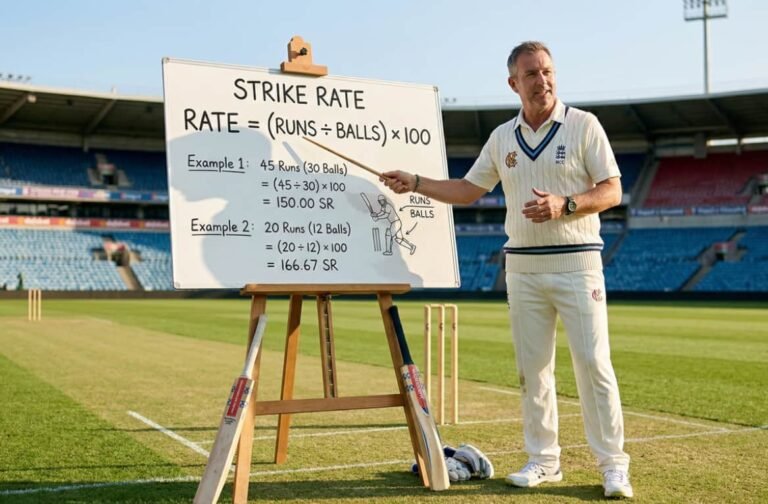
A stats table shows runs, balls faced, strike rate and boundaries. AI can say what those numbers meant in the match.
A 31 off 36 balls looks slow, but on a tired pitch after two early wickets it may have been the innings that held the side together.
A bowler with 2/19 may have broken a dangerous partnership in the powerplay. This only works when the tool knows the match situation as well as the figures.
For checking numbers, lean on established records pages such as women’s T20I records.
For historical context in the longest format, see our guide to players with most runs in women’s Test cricket.
Personalised Updates for Every Kind of Fan
One match has many readers. A casual fan wants a two-line recap at the end of an innings. A follower of one franchise wants news about their team. A fantasy player cares about wickets, catches and strike rates.
AI can produce each version from the same match data, but only when player IDs, team IDs, scorecard fields and event data are clean. Without consistent IDs, a tool can mix up players with similar names, and personalisation turns into guesswork.
The Data Gap in Women’s Cricket
Women’s cricket is still catching up on data. When Cricsheet began adding women’s matches in 2016, its founder noted that women’s sport had long been poorly served by data (Cricsheet’s announcement).
Coverage has grown since, but smaller events may still offer less detail than the big leagues.
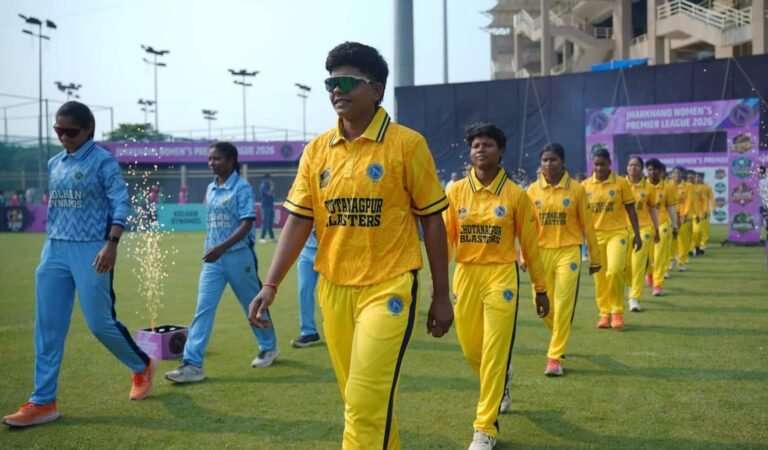
State-level competitions such as the Jharkhand Women’s T20 League 2026 and the Madhya Pradesh Women’s League 2026 are examples of fixtures where fans often want summaries but full data may be thin.
A responsible AI summary handles this honestly:
- It labels estimates as estimates.
- It says “limited data available” instead of inventing detail.
- It links back to the source scorecard.
- A human checks it before it goes live.
FAQs:
- How is AI used in women’s cricket?
It turns scorecards, ball-by-ball data and match status into short summaries, plain-language explanations and player insights.
- Does AI need ball-by-ball data?
Not for a basic recap, but it needs it to explain momentum, pressure and key overs.
- Can AI cricket summaries be wrong?
Yes. Missing match status, wrong player IDs or incomplete data all cause errors, so check important details against an official source.
- Where can I find women’s cricket data?
Open projects such as Cricsheet, records pages such as Wisden’s, and official league sites such as the WPL’s are good starting points.
Final Thoughts
AI in women’s cricket works best as a translator. The scorecard stays the foundation, and AI explains it for experts, new fans and people with two minutes to spare.
The quality of every summary depends on the data underneath: accurate scores, a clear match status, clean IDs and honest labels where information is thin.
As women’s cricket grows, accurate data delivered quickly and explained clearly will matter as much as the live score.
About the Author