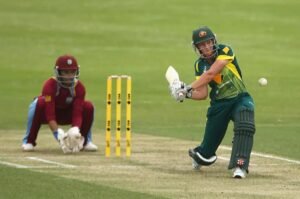
When India’s Pratika Rawal walked off unbeaten on 154 against Ireland in January 2025, she didn’t just register her maiden ODI century.
She crossed fifty average for the first time in her young career, joining one of cricket’s most exclusive clubs.
Only seven women in ODI history have maintained a career average above fifty.
That’s not across a few matches or a golden season—that’s sustained over entire careers, through form slumps, injury comebacks, and the grind of international touring.
The batting average remains cricket’s most honest measure of consistency. It doesn’t care about your strike rate or how many sixes you’ve hit.
It simply asks: how many runs do you score before you get out? In women’s ODI cricket, where bowlers have grown sharper and fielding standards have reached new heights, maintaining an average above forty puts you among the elite.
An average above fifty? That’s reserved for legends.
Highest Batting Average in Women’s ODI Cricket History
Why Batting Average Still Matters in Modern Cricket
- Cricket fans love debating stats, but the batting average endures because it captures something fundamental: reliability. A batter with a fifty-plus average doesn’t just play one brilliant innings every five matches. They deliver time and again, across conditions, against different bowling attacks, when their team needs them most.
- In women’s ODI cricket specifically, the average carries extra weight.
- Fewer matches were played in earlier eras, meaning every dismissal hurt more. Modern players face relentless schedules, but they also benefit from better coaching, fitness regimes, and pitches that don’t misbehave as wildly as they once did. Comparing averages across eras isn’t straightforward, but excellence stands out regardless of when it happened.
The Seven Players Who’ve Averaged Above Fifty
| Rank | Player | Country | Matches | Average | Runs | Centuries |
|---|---|---|---|---|---|---|
| 1 | Rachael Heyhoe-Flint | England | 23 | 58.45 | 643 | 1 |
| 2 | Lindsay Reeler | Australia | 23 | 57.44 | 1034 | 2 |
| 3 | Meg Lanning | Australia | 103 | 53.51 | 4602 | 15 |
| 4 | Bronwyn Calver | Australia | 34 | 53.40 | 534 | 0 |
| 5 | Laura Wolvaardt | South Africa | 122 | 52.16 | 5477 | 13 |
| 6 | Mithali Raj | India | 232 | 50.68 | 7805 | 7 |
| 7 | Pratika Rawal | India | 24 | 50.45 | 1110 | 2 |
Rachael Heyhoe-Flint: The Pioneer’s Record That Still Stands
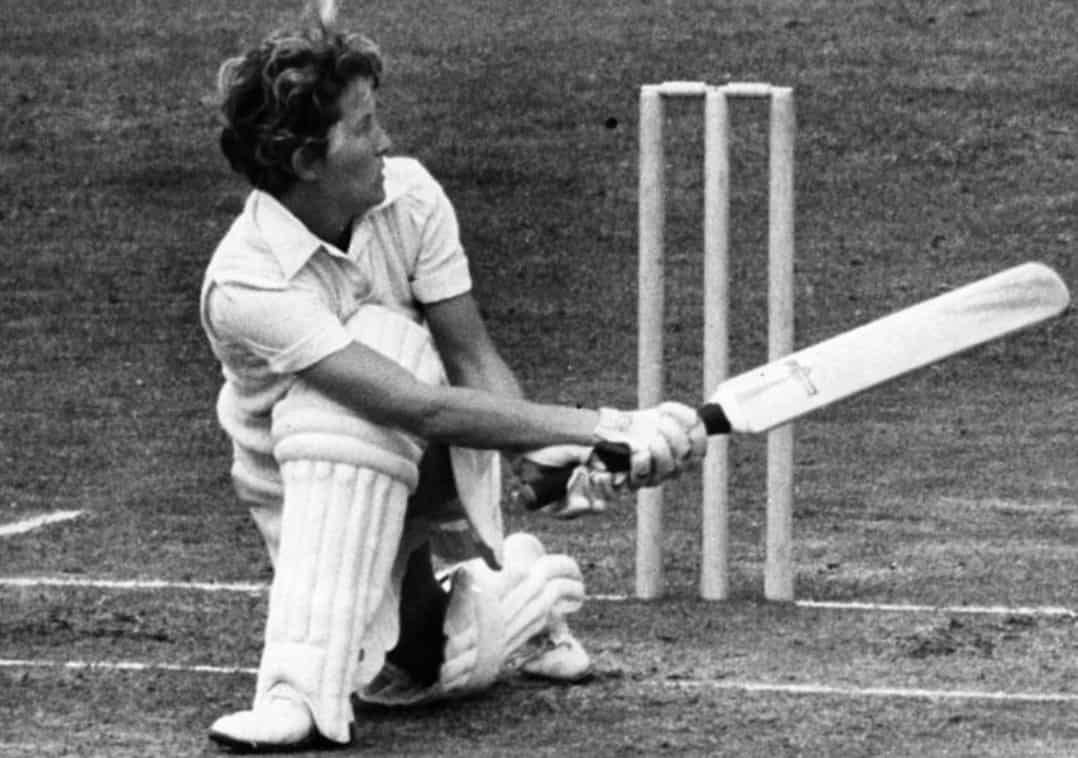
- England’s Rachael Heyhoe-Flint retired in 1982 with an average of 58.45. More than forty years later, no one’s bettered it.
- She played just twenty-three matches, batted twenty times, and was dismissed only eleven times. Nine not-outs in twenty innings tells you something crucial: she knew how to see an innings through.
- Her era was different. Matches were rare, equipment basic, and women’s cricket existed on the margins of the sport.
- Yet Heyhoe-Flint averaged nearly sixty. Her single century and four fifties came when scoring a hundred was genuinely rare. The longevity of her record isn’t about a small sample size—it’s about never wasting an innings.
Lindsay Reeler: The Brief But Brilliant Career
- Australia’s Lindsay Reeler played only four years, from 1984 to 1988, but she left with an average of 57.44.
- Over twenty-three matches, she scored 1,034 runs with two centuries and eight half-centuries. That’s ten scores above fifty in twenty-three innings—a conversion rate most modern batters would envy.
- Her highest score of 143 not out showed she could dominate attacks, not just survive them.
- A strike rate just above fifty reflected her era, but what stands out is the consistency. Four years, one average above fifty-seven, no extended slumps.
Meg Lanning: Redefining Excellence Across a Decade
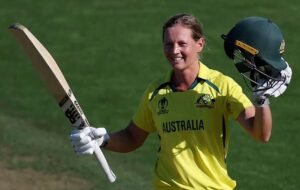
- If you want to understand what makes Meg Lanning special, consider this: she played 103 ODIs and averaged 53.51. Most players see their averages drift downward as careers lengthen and bowlers figure them out. Lanning played for twelve years, faced every condition and attack imaginable, and still averaged above fifty-three.
- Fifteen ODI centuries remains the all-time record for women’s cricket. Add twenty-one half-centuries, and you realize she rarely failed. Her strike rate of 92.20 is what separates her from earlier greats—she didn’t just accumulate runs, she accelerated innings. Modern ODI cricket demands both stability and aggression. Lanning delivered both.
- There’s a reason Australia dominated women’s cricket during her captaincy. When your best batter rarely gets out and scores at nearly a run-a-ball, opposition bowlers have no relief.
Bronwyn Calver: The Unheralded Finisher
- Bronwyn Calver’s career average of 53.40 comes with an asterisk: she was not out eleven times in just twenty-one innings. That means she was dismissed only ten times in her entire ODI career. Her role was clear—bat deep, finish innings, don’t throw it away.
- She never scored a century, but three half-centuries and a highest score of eighty-one not out show she contributed meaningfully. In the 1990s, when totals were lower and finishing innings mattered more than strike rates, Calver’s ability to stay in was gold.
Laura Wolvaardt: The Modern Master
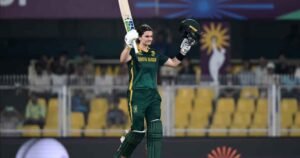
- South Africa’s Laura Wolvaardt is the best active ODI batter in the world right now, and her average of 52.16 across 122 matches explains why. Thirteen centuries and thirty-eight fifties mean she’s passed fifty in fifty-one of her 121 innings. That’s consistency bordering on predictability—in the best possible way.
- Her highest score of 184 not out against Sri Lanka showed she can go beyond big scores into record territory. Unlike some of the earlier names on this list, Wolvaardt plays in an era of high-quality bowling attacks and professional standards. She’s doing it against the best competition women’s cricket has ever seen.
- At just twenty-five years old, Wolvaardt could rewrite the record books. If she maintains this average for another five years, she’ll challenge for the all-time top spot.
Mithali Raj: The Ultimate Volume Scorer
- Mithali Raj’s 7,805 ODI runs is a record that might stand forever. She played 232 matches over twenty-three years, faced every conceivable situation, and averaged 50.68. Sixty-four half-centuries show how consistently she delivered, even if she converted to hundreds less often than some peers.
- Her strike rate of 66.19 looks slow by today’s standards, but context matters. Raj played much of her career in a defensive era when scoring above seventy was considered brisk. She also batted in difficult conditions across the subcontinent, where pitches offered more to bowlers.
- Being not out fifty-seven times highlights her finishing ability. When India needed someone to bat through, Raj was there. Her average would’ve been lower if she’d taken more risks or batted higher up the order in every game. Instead, she played the situations as they came.
Pratika Rawal: The Emerging Force
- It’s early days for Pratika Rawal, but averaging 50.45 after twenty-four matches is serious.
- Two centuries and seven fifties in twenty-three innings suggest this isn’t a fluke. Her strike rate of 82.83 shows she’s scoring quickly too, fitting modern ODI demands.
- What’s impressive is how quickly she’s established herself. Rawal debuted in 2024, and within a year, she’s among the top averages in history.
- If she can sustain this across a full career, India will have another all-time great on their hands.
Expert Insight: What Separates the Elite
- The difference between averaging forty and averaging fifty isn’t just ten runs.
- It’s about mental discipline, knowing when to attack, and having the technique to survive tough spells.
- Players with fifty-plus averages don’t have many single-digit scores. They convert starts into substantial contributions.
- Watch how Wolvaardt plays the first twenty balls of her innings—she’s cautious, getting her eye in, rarely forcing the issue.
- Once set, she accelerates without taking wild risks.
- That’s a pattern across all these batters.
- They understand that the first few overs aren’t about dominating; they’re about surviving long enough to dominate later.
How These Averages Compare to Men’s Cricket
- For context, the highest average in men’s ODI cricket (minimum seventy-five innings) is around fifty-seven.
- The top ten highest batting average in women’s ODI cricket history shows women have matched and in some cases exceeded that benchmark, though sample sizes and conditions differ.
- What’s clear is that excellence at the highest level requires the same qualities: technique, temperament, and consistency. Gender doesn’t change what it takes to average above fifty—you need to be exceptional.
Frequently Asked Questions
- Who holds the highest batting average in women’s ODI cricket history?
Rachael Heyhoe-Flint from England holds the record with an average of 58.45, achieved between 1973 and 1982.
- What’s considered a good average in women’s ODI cricket?
An average above forty is very good, while anything above fifty is rare and marks a player as elite. Only seven players have career averages above fifty.
- Is Meg Lanning the highest run-scorer in women’s ODIs?
No, Mithali Raj holds that record with 7,805 runs. Lanning scored 4,602 runs but has the higher average and more centuries.
- How does Laura Wolvaardt’s average compare historically?
Wolvaardt’s average of 52.16 ranks fifth all-time and first among active players. She’s still adding to her career totals.
- What’s the highest batting average in women’s T20 cricket?
While this article focuses on ODIs, the highest average in women’s T20 cricket differs due to the shorter format’s dynamics, with several players averaging in the mid-thirties to low forties.
The Long Game of Consistency
Batting average doesn’t capture everything.
It doesn’t show how you handled pressure in a World Cup final or how you rebuilt an innings after a top-order collapse.
But over the span of a career, it reveals who could be counted on match after match, year after year.
The seven names on this list played across different eras, faced different challenges, and used different techniques.
What unites them is simple: they rarely got out without making it count.
Whether it was Heyhoe-Flint in the 1970s or Wolvaardt today, that consistency defines greatness in any era of the game.