Cricket grounds come in all shapes and sizes.
While some stadiums sprawl across massive properties with boundaries pushing 90 metres, others pack international cricket into surprisingly tight spaces.
These compact venues offer something different.
They’re where emerging nations build their programs and where established countries find backup options for packed schedules.
Smallest Cricket Ground in the World By Boundary and By Capacity
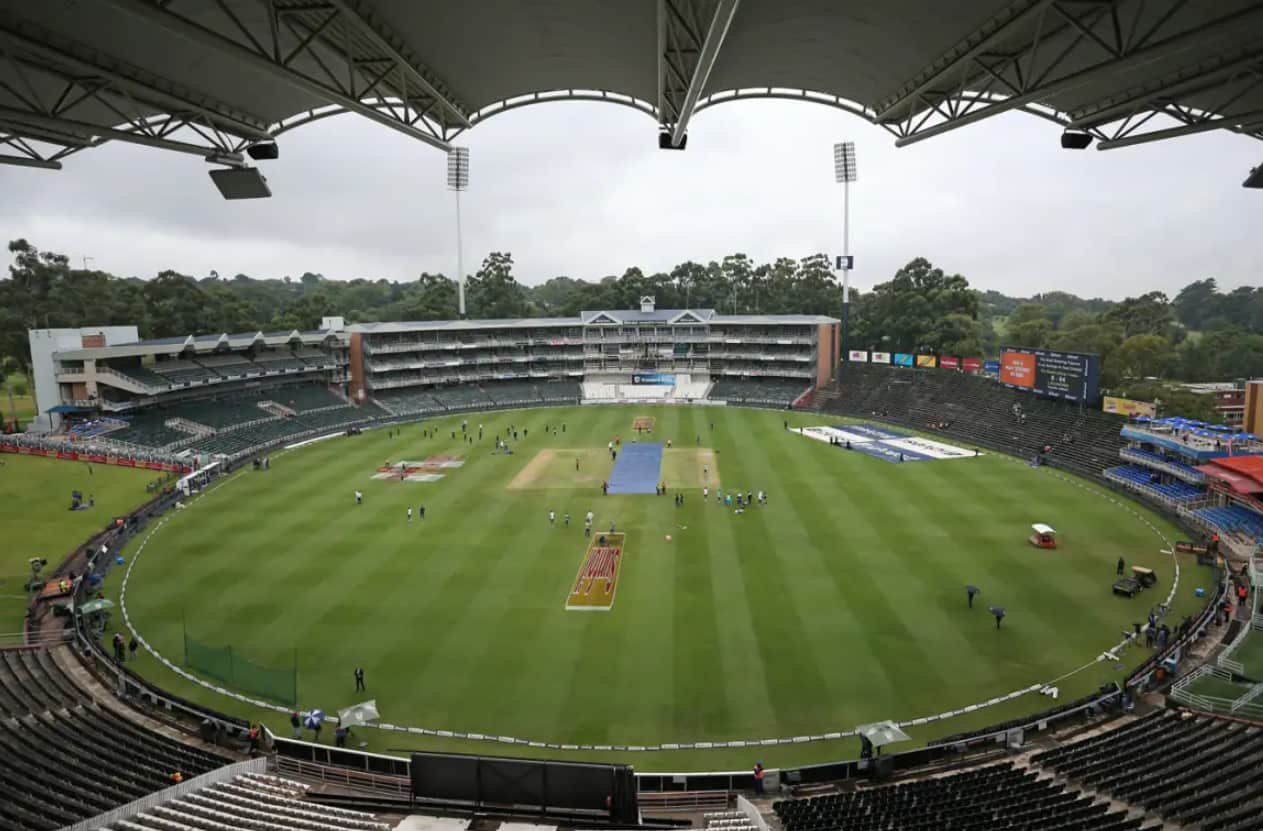
Auckland’s Eden Park: The Tightest Boundaries in Cricket
When you’re looking for the smallest cricket ground in the world by boundary, Eden Park in Auckland gives you the answer.
The straight boundary measures just 55 metres.
That’s exceptionally short. Most international grounds feature straight boundaries between 70 and 80 metres.
Eden Park cuts that by nearly a third, creating a completely different game environment.
Limited-overs cricket thrives here. Batters target those short boundaries relentlessly.
The scoring rates climb higher than almost anywhere else in world cricket.
Want proof? Look at the 2018 T20I between New Zealand and Australia.
New Zealand posted 243/6 in the first innings. Australia responded with 245/5.
Both teams shattered records in one match. Those 55-metre boundaries played a massive role.
The Five Grounds With the Shortest Playing Areas
These stadiums prove you don’t need huge dimensions to host international matches. Each brings its own story to cricket.
| Ground Name | Location | Shortest Boundary Distance | Boundary Position |
|---|---|---|---|
| Eden Park | Auckland, NZ | 55 metres | Straight |
| The Wanderers | Johannesburg, SA | 64 metres | Square |
| Lord’s | London, England | 65 metres | Square |
| Eden Gardens | Kolkata, India | 65 metres | Square |
| Holkar Stadium | Indore, India | 68 metres | Straight |
South Africa’s Wanderers Ground
The Wanderers in Johannesburg sit second on this list. At its tightest point, a square boundary measures just 64 metres.
This venue hosted one of ODI cricket’s most extraordinary matches in 2006. Both South Africa and Australia passed 400 runs.
That kind of scoring happens rarely anywhere. At The Wanderers, with its short boundaries, it became possible.
The Historic Lord’s Ground
Lord’s carries centuries of cricket history. It’s been the sport’s home since the 1800s. Back then, nobody worried about standardizing field sizes.
The shortest square boundary comes in at 65 metres. That worked perfectly for cricket played with heavier bats and more cautious techniques.
Modern power hitters find it easier to clear those boundaries than players did 100 years ago.
Kolkata’s Eden Gardens
Eden Gardens appears enormous on television. The crowd fills every corner, creating an intimidating atmosphere for visiting teams.
But the playing area itself is compact. The shortest boundary measures 65 metres at its square position.
The reason? The stadium dedicates most space to seating. With a 66,000 capacity, something had to give. The field size took the hit.
Indore’s Holkar Stadium
India spreads international cricket across many cities. Holkar Stadium in Indore entered the rotation in 2006 when England visited for an ODI.
The straight boundary is 68 metres, ranking among the shortest worldwide. Since then, this venue has hosted T20Is and test matches. It’s earned its place in India’s cricket infrastructure.
Expert Insight: The Psychology of Short Boundaries
Short boundaries mess with everyone’s heads. Fielding captains can’t set defensive rings because there’s nowhere deep enough.
A fielder at 64 metres isn’t really protecting anything.
Bowlers carry extra pressure. Death overs become nightmares. Every yorker needs to land perfectly.
Missed by three inches, and it’s six runs. That mental burden wears bowlers down over 20 overs.
Batters feel liberated. They don’t need perfect timing. A mistimed pull shot still clears the rope.
That freedom changes shot selection completely. Why defend when aggressive batting pays off so easily?
I’ve watched teams throw game plans out the window at these grounds. Conservative cricket doesn’t work.
Everyone knows the scores will climb high. The team batting second doesn’t panic at 200 needed in 18 overs. It’s achievable, and they know it.
Scotland’s Grange Club: Smallest Stadium by Seats
Switch focus to seating capacity and the smallest cricket ground in the world by capacity is The Grange Club in Edinburgh. Official capacity sits at 5,000 as of 2022.
Scotland plays the majority of international matches here. As an emerging cricket nation, they’re building their program steadily. Better results might eventually require a bigger venue.
For now, The Grange Club works. Scotland played their first ODI here against Bangladesh in 1999. It’s been their cricket home for over two decades.
World’s Smallest Cricket Stadiums by Capacity
These venues serve important roles despite limited seating. They give cricket a foothold in developing markets and provide options for established nations.
Belfast’s Stormont Ground
Ireland achieved test status but kept using smaller stadiums. Stormont Cricket Ground in Belfast holds 6,000 spectators.
While Dublin hosts many matches, Stormont remains a regular venue.
Ireland played their first international here in 2006, an ODI against England. Test cricket hasn’t arrived yet, but ODIs and T20Is happen regularly.
Additional Compact Stadiums
Canada’s Maple Leaf Cricket Club in Ontario seats 7,000 fans. Opening in 1954, it became Canada’s second international cricket venue. The first match was an ODI against Bermuda in 2008.
Australia’s Traeger Park in Alice Springs holds 7,200. The international schedule expanded rapidly, forcing Australia to develop new venues. First-class cricket and Big Bash matches started here in 2015.
Zimbabwe’s Queens Sports Club in Bulawayo completes the list. The capacity was 9,000 for years before expanding to 12,497 recently.
Zimbabwe uses it consistently despite its limited size. Their first test here was against Sri Lanka in October 1994.
| Stadium | City, Country | Seating Capacity | International Cricket Since |
|---|---|---|---|
| The Grange Club | Edinburgh, Scotland | 5,000 | 1999 |
| Stormont | Belfast, Ireland | 6,000 | 2006 |
| Maple Leaf CC | Ontario, Canada | 7,000 | 2008 |
| Traeger Park | Alice Springs, Australia | 7,200 | 2015 |
| Queens Sports Club | Bulawayo, Zimbabwe | 12,497 | 1994 |
Rules Around Ground Size for International Matches
Here’s something many fans don’t realize. The ICC doesn’t mandate specific ground dimensions or capacity minimums.
They offer recommendations, not requirements.
For major tournaments like World Cups, the ICC evaluates safety and facilities. Can the venue handle crowds properly?
Are medical services adequate? Does security meet standards? These questions matter more than raw capacity numbers.
Money influences decisions, too. High-profile matches need large venues.
An India versus Pakistan World Cup game could sell 150,000 tickets if that many existed.
Putting it in a 15,000-seat stadium wastes commercial opportunity.
Group matches between emerging nations work fine at smaller grounds.
A packed 8,000-seat stadium creates a better atmosphere than a 60,000-seat venue that’s quarter full.
Tactical View: Why Small Grounds Matter?
I’ve traveled to county cricket outgrounds across England during the summer.
Main stadiums host The Hundred, leaving smaller venues for the One Day Cup.
These intimate grounds offer something special. You hear leather on willow clearly.
You’re close enough to see fielders’ expressions. The crowd consists of dedicated fans who traveled specifically for cricket.
There’s the authenticity that smaller stadiums provide. Massive venues can feel corporate and distant.
Everyone’s watching entertainment as much as cricket. Small grounds feel pure. It’s about the game itself.
These venues fulfill specific needs. Emerging cricket nations need affordable infrastructure.
Established countries need venue options for packed calendars. Fans need accessible ways to watch live matches.
Comparing Boundary Size Against Seating Capacity
Notice an interesting pattern? The smallest grounds by boundary aren’t the smallest by capacity.
Eden Park’s 55 metre boundaries come with 50,000 plus seating.
The Grange Club’s 5,000 capacity doesn’t mean tiny field dimensions.
Different priorities drive different designs. Some stadiums maximize spectator seating around compact fields.
Others maintain standard playing areas but don’t build enormous stands.
Both strategies serve purposes. Eden Park needs capacity for Auckland’s sports market.
The Grange Club needs affordability for Scotland’s developing program.
FAQs
- Which international ground has the shortest boundaries?
Eden Park in Auckland holds this record with a 55 metre straight boundary.
- What’s the smallest cricket stadium by seating capacity?
The Grange Club in Edinburgh, Scotland, has 5,000 seats.
- Does the ICC require minimum boundary distances?
No. The ICC provides recommendations, but no mandatory minimums exist.
- Why would famous grounds have such short boundaries?
Many were built long before modern cricket. Designs reflected the game as played in earlier centuries.
- Can World Cup matches happen at small grounds?
Yes, provided they meet ICC safety and facility standards, though major matches typically use larger venues.
Wrapping Up
The smallest cricket ground in the world depends on what you’re measuring.
Eden Park’s 55 metre boundaries win the field dimension contest.
The Grange Club’s 5,000 seats claim the capacity title.
Both types of compact venues contribute meaningfully to cricket.
Short boundary grounds produce explosive batting displays and high scores.
Small capacity stadiums create intimate, focused atmospheres.
These venues prove cricket adapts to different scales.
Not every match needs 100,000 fans and 80 metre boundaries.
Lord’s maintains relevance despite 65 metre boundaries.
Scotland develops its cricket program at The Grange Club’s 5,000 seats.
Cricket thrives on diversity. Massive stadiums and compact grounds both belong.
Short boundaries test bowlers differently.
Limited seating brings fans closer. Each venue type serves the game in its own way.
Also Check: